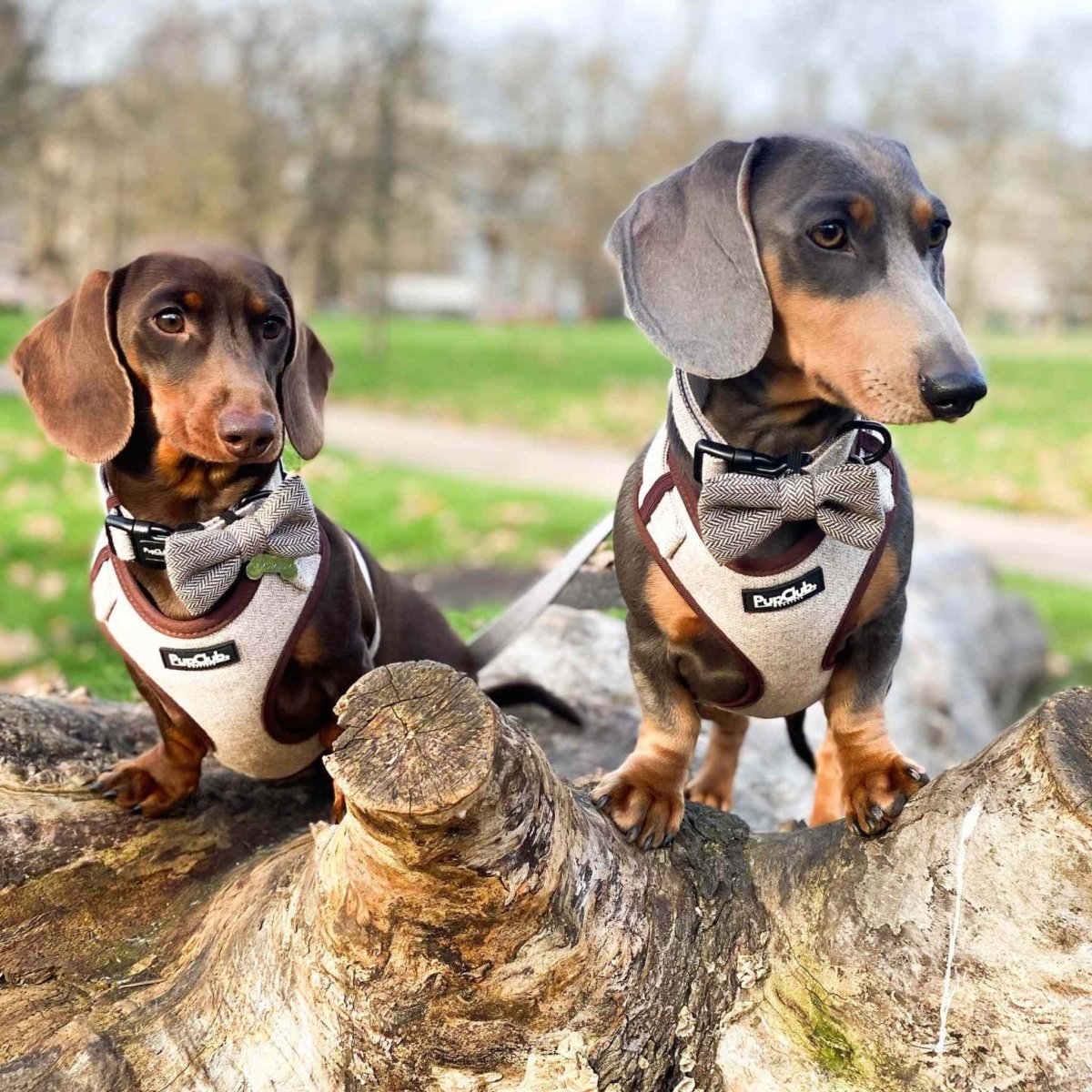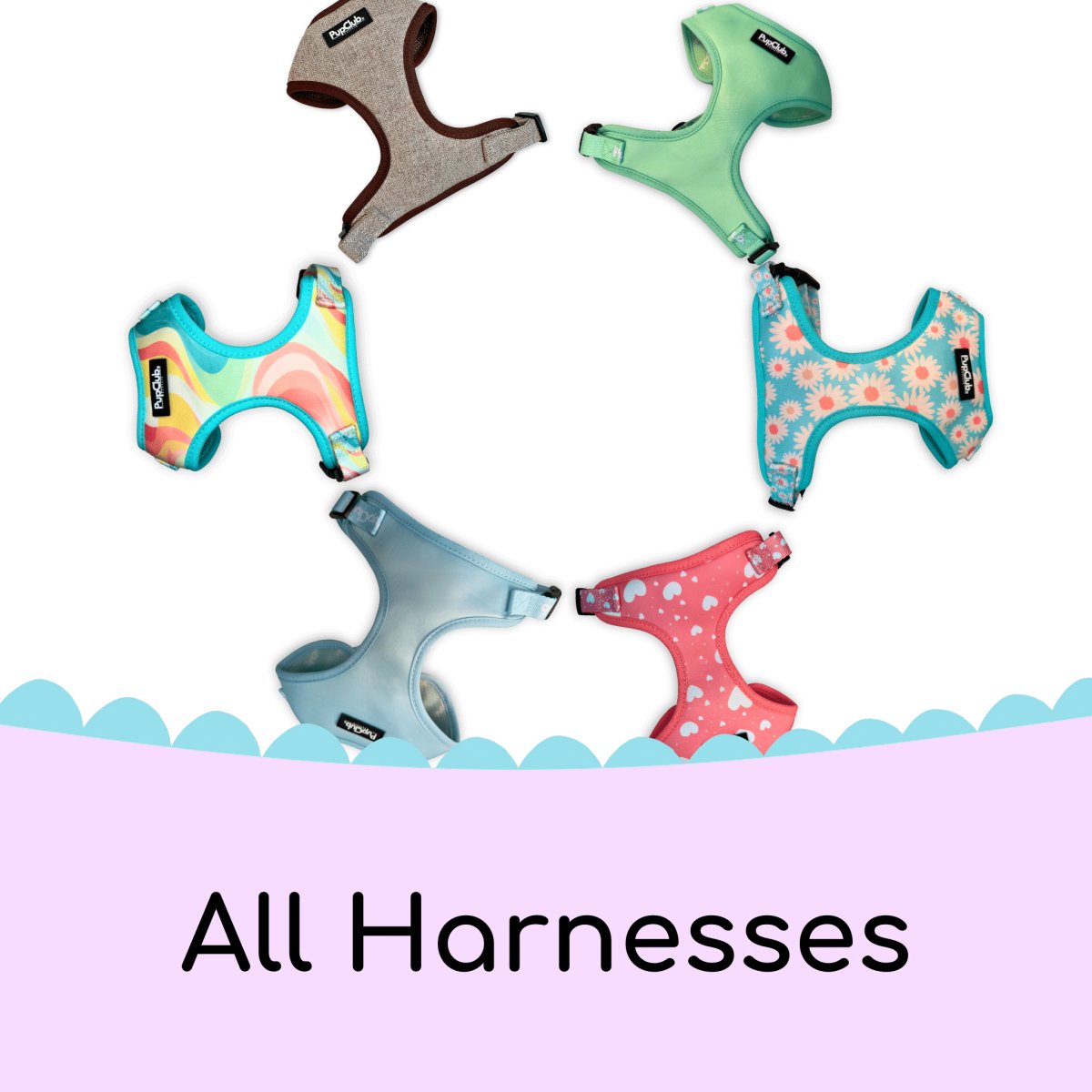


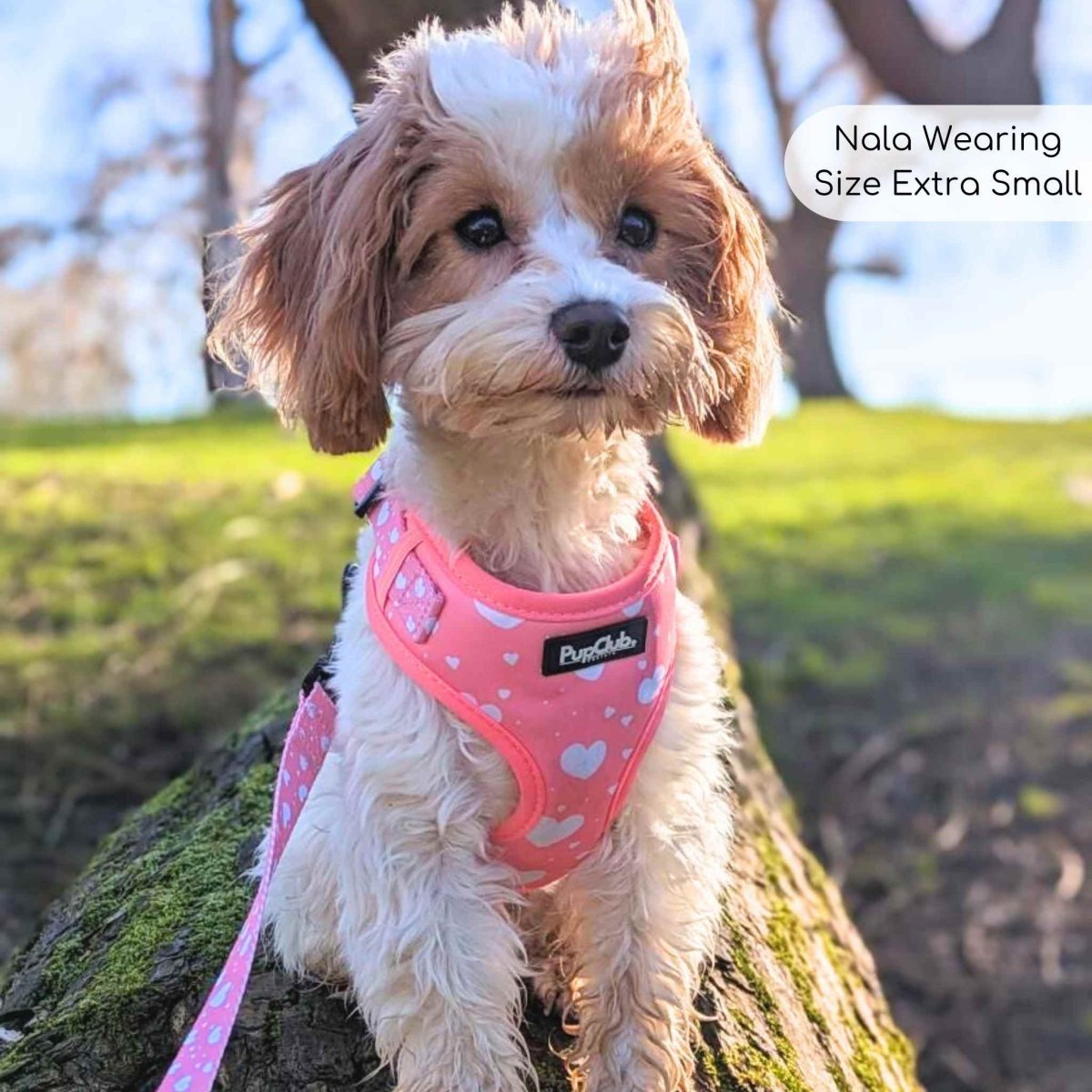

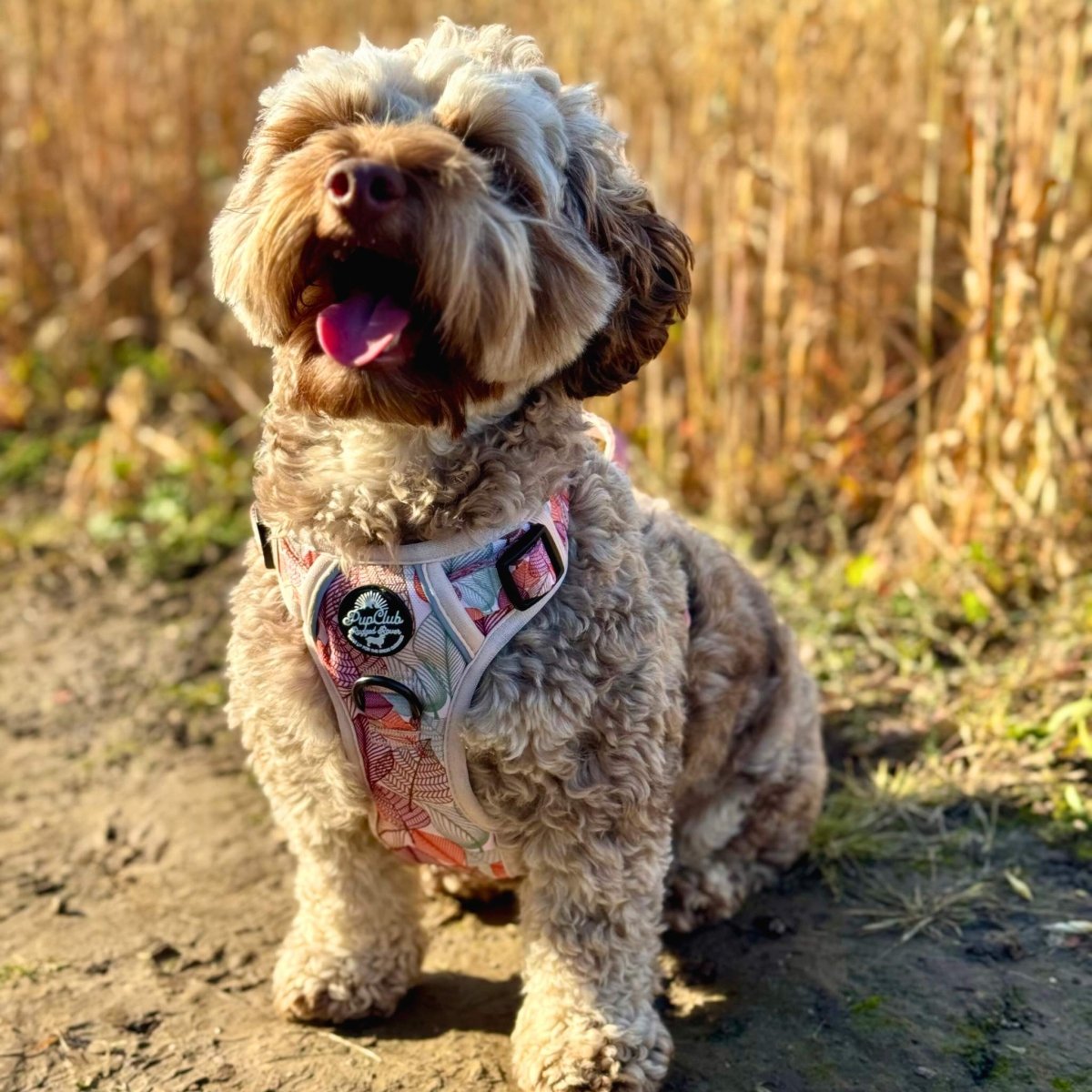
Updated for 2026 — UK guide. Finding the best small dog harness UK shouldn't mean choosing between safety and style. Small breeds — from 2kg Chihuahuas to 8kg Cockapoos — have unique anatomy that demands harnesses sized, padded and engineered specifically for them. Generic small-dog harnesses cause chafing, trachea pressure and the dreaded backwards-wiggle escape. This 2026 buyer's guide walks you through harness types, sizing for under-3kg toy breeds, breed-specific recommendations, and why our escape proof small dog harness UK range solves the three failure modes that affect almost every small-dog walker.
Our 2026 Quick Picks for Small Dogs
Skip the research if you want — these are the three harnesses we'd buy ourselves, by use case:
- Best overall for small dogs: Rugged Rover No-Pull Dog Harness — padded chest plate, dual D-rings, lockable side clasp, sized XS-L (3–25kg). The version we recommend to 9 out of 10 small-dog owners.
- Best escape-proof for wriggly toy breeds: Classic Adjustable Dog Harness — single-buckle, three-point adjustment, perfect for Chihuahuas, Yorkies and small breeds under 4kg.
- Best for Puppies and tiny dogs: Puppy Step In Harness — Perfect Starter Harness for a new pup. Step in design for easy put on / take off. Also Ideal for tiny breeds that dont like the harness going over their head.
Quick answer: The best small dog harness UK in 2026 is a padded no-pull design with a lockable neck clasp and dual D-rings, sized to the dog's exact chest girth (not weight alone). The PupClub Couture Rugged Rover fits dogs 3–25kg and is engineered specifically to prevent the backward-wiggle escape common in toy breeds.
Why Small Dogs Need Specially Designed Harnesses
Small dog owners face unique challenges when it comes to finding the right walking gear. Your petite pup deserves a harness that's designed specifically for their smaller frame and delicate body structure. Here's why a specialized small dog harness makes all the difference:
- Proper weight distribution to prevent strain on delicate necks and throats
- Secure, escape-proof design that prevents wiggling out—a common issue with smaller breeds
- Adjustable fit systems that accommodate the unique proportions of small dog breeds
- Lightweight materials that won't overwhelm or restrict your tiny companion
- Gentle, non-chafing construction for sensitive skin and fine coats
The medical case for a proper small-dog harness
Toy and small breeds have a tracheal cartilage diameter of just 5–8mm — roughly the width of a drinking straw. A standard collar concentrates lead pressure on this fragile area, and veterinary studies link collar-only use to tracheal collapse (a progressive condition particularly common in Yorkshire Terriers, Chihuahuas, Pomeranians and Maltese). Brachycephalic small breeds — Pugs, French Bulldogs, Shih Tzus — already have compromised airways and should never wear a collar on lead. A correctly fitted harness shifts that load to the sternum and shoulders, eliminating the risk entirely.
Toy Breeds
Chihuahuas, Pomeranians, Yorkshire Terriers, Toy Poodles
Small Breeds
Dachshunds, Shih Tzus, Maltese, Jack Russells
Small-Medium Breeds
Pugs, French Bulldogs, Miniature Schnauzers, Cockapoo
How to Put a Harness on a Small Dog: Simple Steps for Success
Many small dog owners struggle with harness application—but it doesn't have to be stressful! With the right design and technique, putting on your dog's harness can be quick and fuss-free. Our Rugged Rover small dog harnesses feature an innovative design that makes application easy:
Step-by-Step Harness Application for Small Dogs
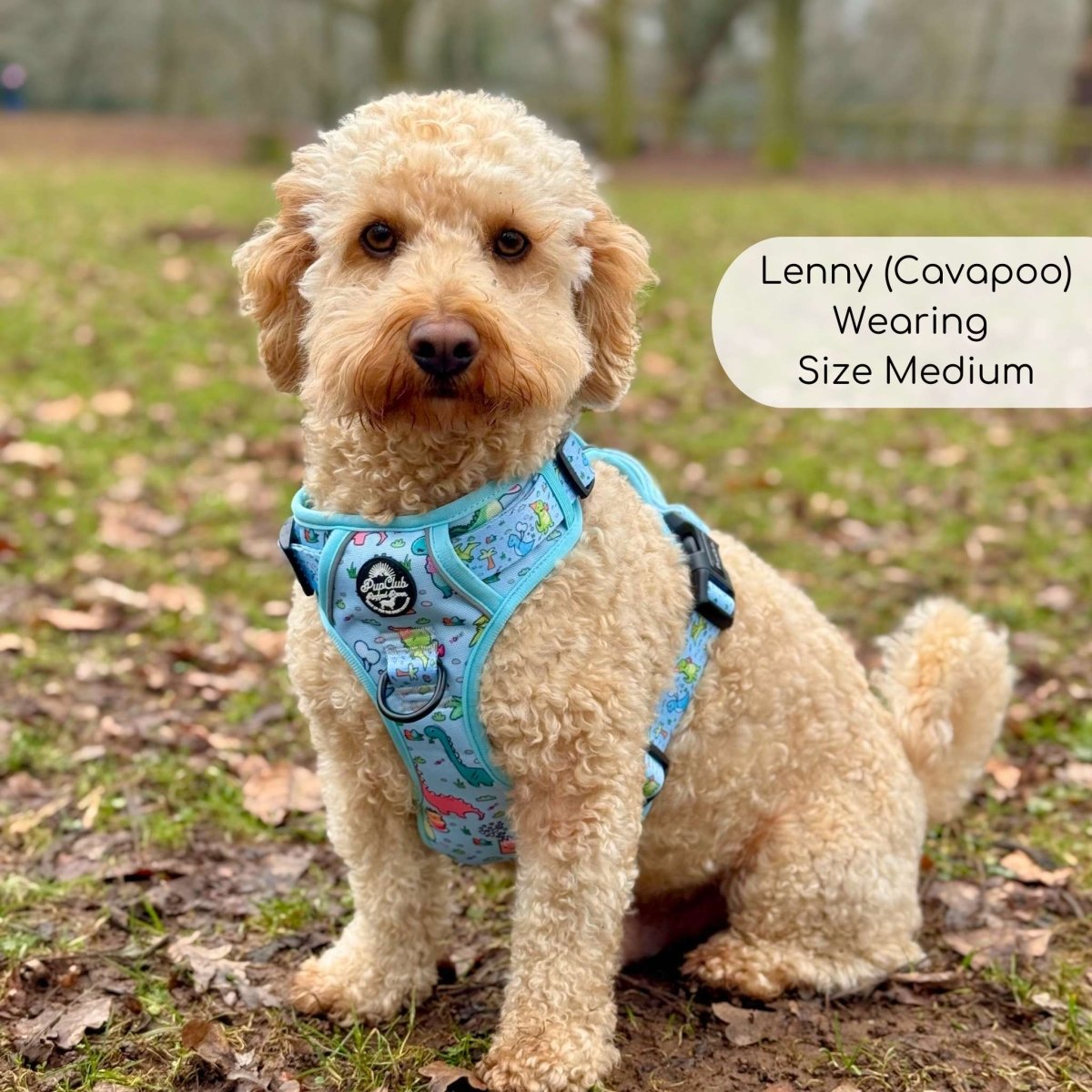
Pro tip for head-shy dogs: If your Chihuahua, Yorkie or rescue dog flinches when anything goes over their head, use a step-in design instead — the dog steps two front paws into the loops and the harness clips on the back, no head contact required.
- Prepare the harness by unfastening all buckles to fully open it.
- Place it gently over your dog's back while they're calm and standing.
- Secure the lockable neck clasp—our design eliminates the need to pull anything over your dog's sensitive head!
- Adjust the chest and belly straps for a perfect, custom fit.
- Check for comfort by ensuring you can fit two fingers between the harness and your dog's body.
With our escape proof small dog harness UK design, there's no more wrestling or struggling—just an easy, stress-free experience for both you and your furry friend.
What Type of Harness Is Best for Small Dogs?
There are four mainstream harness designs on the UK market and each behaves differently on a small-dog body. Here's how they compare for toy and small breeds:
| Harness Type | How It Fits | Best For | Watch-Out |
|---|---|---|---|
| Step-in | Dog steps front paws into two loops; clips on the back | Head-shy dogs, puppies learning, Chihuahuas, Yorkies | Some cheaper designs allow backward escape — needs lockable side clasp |
| Y-front (Vest / Adjustable) | Goes over the head; chest panel sits in a Y over the sternum | Active small dogs, French Bulldogs, Pugs (Y-front avoids throat pressure) | Over-the-head application can stress head-shy dogs; pick one with a side buckle |
| H-shape (Strap) | Two loops (neck + chest) joined by a back strap | Lightweight, fast-drying, good for swim/beach | Minimal padding — not ideal for pullers; can chafe under-arm |
| Padded No-Pull | Y-front with both front + back D-rings and padded chest panel | Pullers, training, dogs with delicate skin or fine coats | Bulkier; pick a size that fits proportions, not chest girth alone |
For most UK small-dog owners, we recommend a padded no-pull design with a lockable neck clasp — the combination eliminates the two failure modes that affect every other type: over-the-head stress and backward escape. Our Rugged Rover No-Pull Dog Harness is engineered around this design specifically for the 1–10kg weight range.
PupClub Couture's small dog harnesses incorporate all these essential features and more, making them the best harness for small dogs available in the UK market today.
Best Harness by Small-Breed: Quick Recommendations
Small dogs aren't one body shape. A Chihuahua needs lightweight delicacy; a Pug needs Y-front airway clearance; a Dachshund needs back-length support. Here's our 2026 cheat-sheet:
| Breed | Recommended Size | Key Feature To Look For | Deep-Dive Guide |
|---|---|---|---|
| Chihuahua (1.5–3 kg) | XXS / XS | Ultra-light padding, lockable side clasp (escape risk) | See sizing table below |
| Yorkshire Terrier (2–3.5 kg) | XS | Soft mesh — avoids matting on long coats | See sizing table below |
| Pug (6–8 kg) | S / M | Y-front design — keeps trachea clear for brachycephalic breeds | Best Harness for Pugs UK 2026 |
| French Bulldog (8–12 kg) | M | Wide padded chest plate; no over-head pull-through | Best Harness for French Bulldogs UK 2026 |
| Dachshund (4–9 kg) | S / M | Chest-cradling Y-front to protect the long back (IVDD risk) | Best Harness for Dachshunds UK 2026 |
| Shih Tzu (4–7 kg) | S | Soft lining — protects long silky coat from matting | Best Harness for Shih Tzus UK 2026 |
| Cockapoo (6–10 kg) | M | Dual D-rings — Cockapoos pull and benefit from front-clip training | Best Harness for Cockapoos UK 2026 |
| Maltese / Bichon (3–5 kg) | XS / S | Mesh-backed to avoid matting; light reflective trim | See sizing table below |
For breeds not listed, use the chest-girth measurement above — that's a more reliable size guide than weight alone, especially for mixed breeds.
Extra Small, Tiny & Puppy Harnesses (Under 4 kg)
Dogs under 4 kg — toy breeds, teacup mixes, and most puppies under 4 months — need genuinely different engineering, not just a smaller version of a standard harness. Our XS small dog harnesses and Puppy Step in harnesses are built specifically for this weight class.
- Ultra-lightweight construction — under 80g total, so it won't compromise a young puppy's posture or a toy breed's natural gait
- Smaller buckle hardware — proportional to a tiny dog's chest so it doesn't dig in when the dog lies down
- Three-point fine adjustment — essential because chest girth varies dramatically across the 1–4 kg range (a Teacup Chihuahua and a 4kg Pomeranian both wear XS but need very different cinch points)
- Breakaway-free lockable clasps — toy breeds back out of regular harnesses; the lockable side clasp eliminates this
- Soft, fine-coat-safe lining — Yorkies, Maltese and Pomeranians have hair (not fur) which mats wherever there's friction
Puppy sizing tip: Puppies grow fast — between 8 weeks and 6 months a small-breed puppy typically goes through two harness sizes. Buy XXS or XS for first walks (around 12 weeks post-vaccination), and re-measure chest girth every 3 weeks. The Rugged Rover's three-point adjustment usually accommodates one full size of growth before needing to size up. For a full puppy walking guide, see our 2026 puppy harness guide.
Browse our complete range of XXS-XS adjustable harnesses — every design is available in all five small-dog sizes.
Escape-Proof Small Dog Harness: How It Actually Works
"Escape-proof" gets thrown around as marketing, so let's be specific about what makes a small-dog harness genuinely escape-proof — and what failure mode each feature prevents:
| Escape Mode | Why It Happens | The Feature That Prevents It |
|---|---|---|
| Backward wiggle (most common for Chihuahuas, Yorkies, fearful dogs) | Dog reverses and slips the chest loop forward over the head | Lockable neck clasp + properly cinched two-finger fit at the neck |
| Side-pop escape | Quick-release buckle fails when dog twists during a startle | Steel core hardware + secondary safety loop on the side buckle |
| Stretch-out | Cheap nylon webbing stretches over 6 months and the fit loosens | Reinforced bartack stitching + non-stretch chest panel |
| Chew-through (puppies) | Puppy chews the strap when bored on lead | Reinforced webbing + chew-resistant trim around the chest plate |
The combination of all four matters more than any single feature. Our escape proof small dog harness UK range is the only one we know of engineered against all four failure modes simultaneously — which is why our Yorkshire Terrier and Chihuahua customer reviews are dominated by phrases like "finally a harness she can't escape from".
Are No-Pull Harnesses Good for Small Dogs?
Absolutely! A proper no pull harness for small dogs like our Rugged Rover Dog Harness can be a game-changer for your daily walks. Many small breeds have big personalities and can be enthusiastic pullers despite their size—putting their delicate tracheas at risk. Here's why our no-pull design is ideal for your petite companion:
- Front attachment point gently redirects pulling behavior without putting pressure on the throat
- Even weight distribution across the chest rather than concentrating force on the neck
- Training-friendly design that helps teach proper walking etiquette
- Gentle correction suitable for delicate small breed frames
- Comfortable control that reduces strain for both you and your dog
Training tip: Use the front D-ring during walks where pulling is likely (parks, new routes) and the back D-ring for relaxed pavement walks. Small dogs respond fastest to gentle, consistent redirection — three short 10-minute sessions a week typically settles pulling within 3–4 weeks. For a deeper protocol with all our recommended no-pull techniques, see our complete no-pull harness guide.
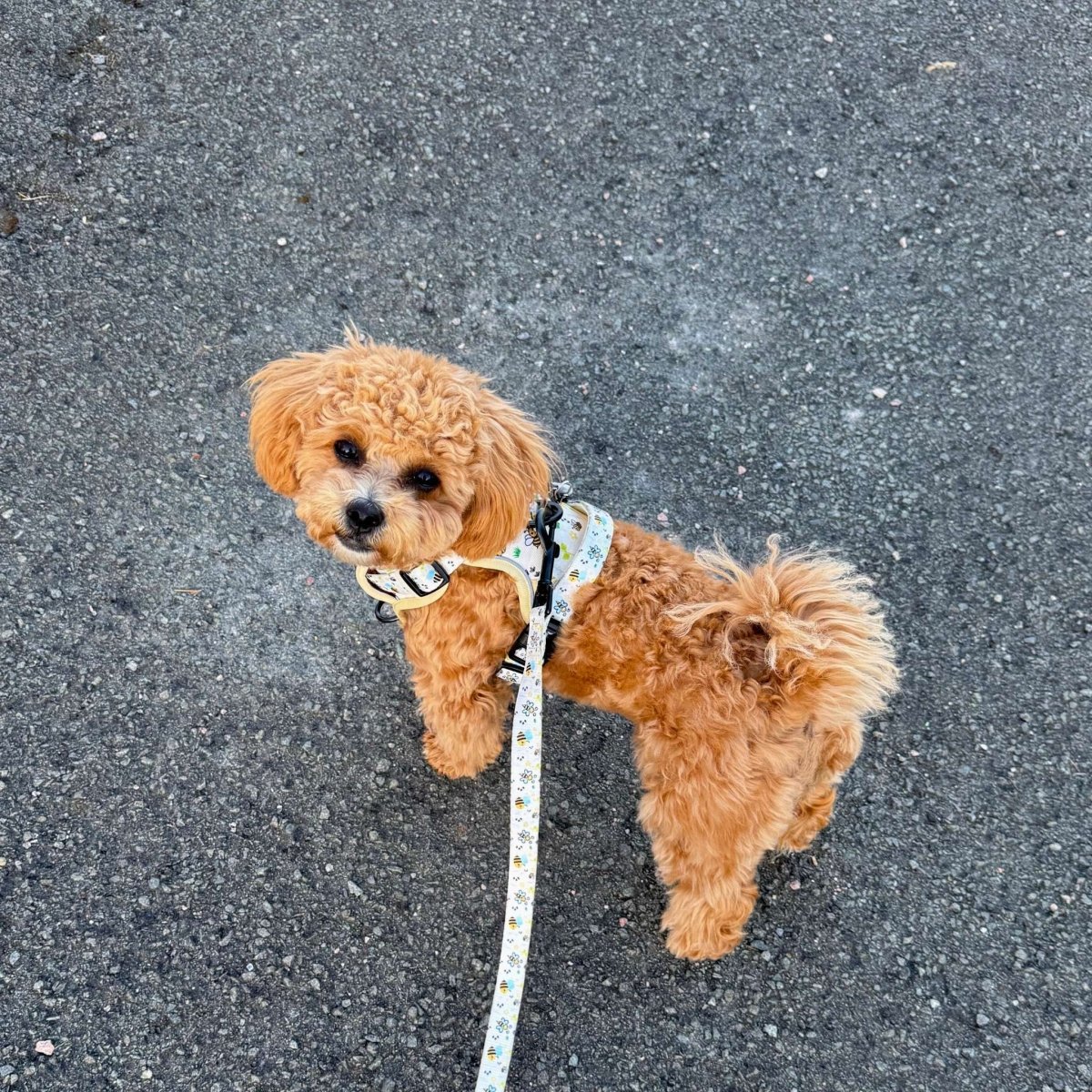
Small Dog Harness Collections at PupClub Couture
Find the perfect small dog harness in our specially curated collections that combine functionality, security, and style:
Adjustable Dog Harness Collection
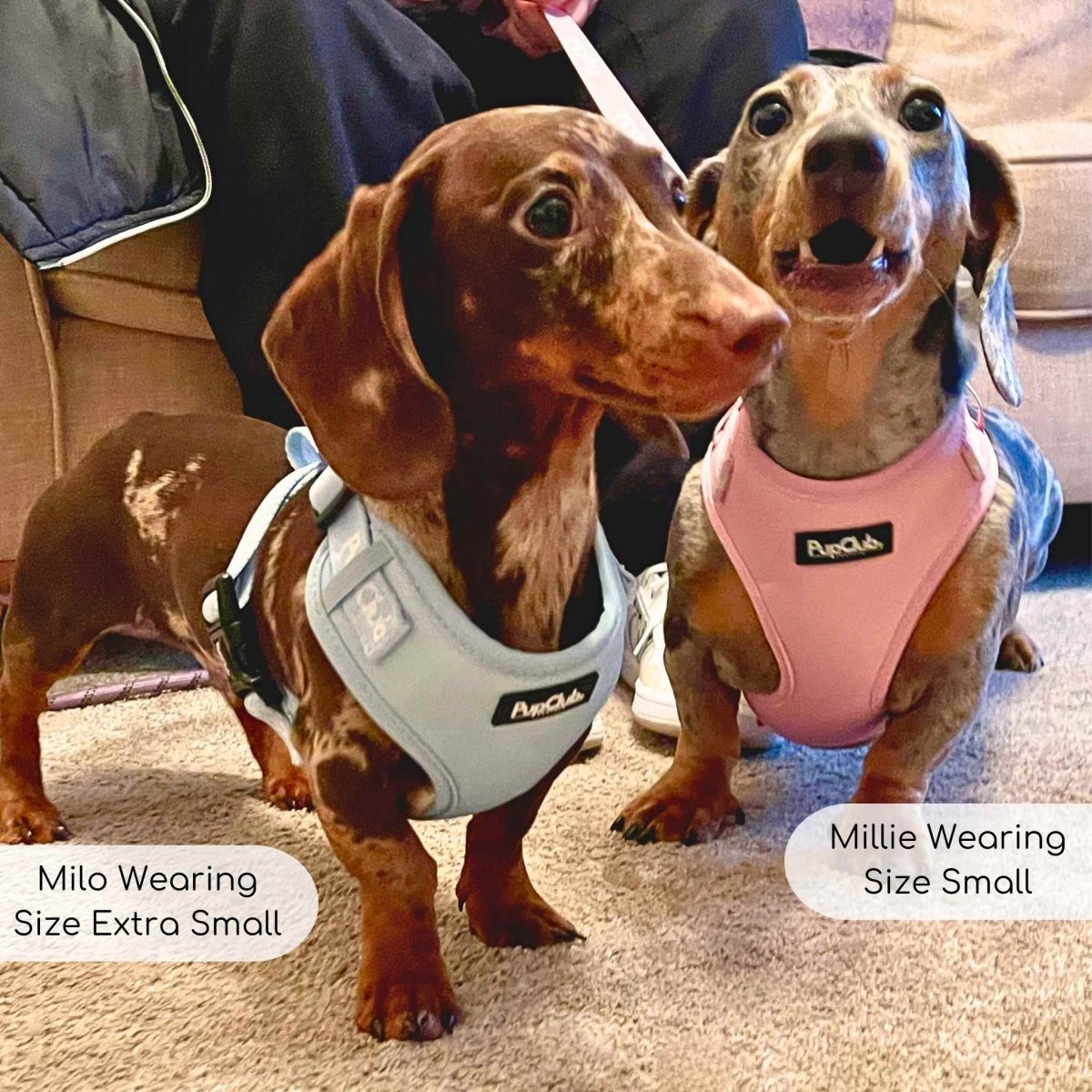
Our Classic Adjustable Dog Harness Collection offers timeless designs with a lightweight premium feel. Each escape proof small dog harness features our signature designs. Perfect for everyday walks and adventures, these harnesses combine uncompromising safety with versatile style.
- Available in XXS to Large sizes (perfect for dogs 1-8kg)
- Single Buckle
- Fully adjustable at 3 points
- Machine washable for easy care
Rugged Rover No-Pull Dog Harness Collection
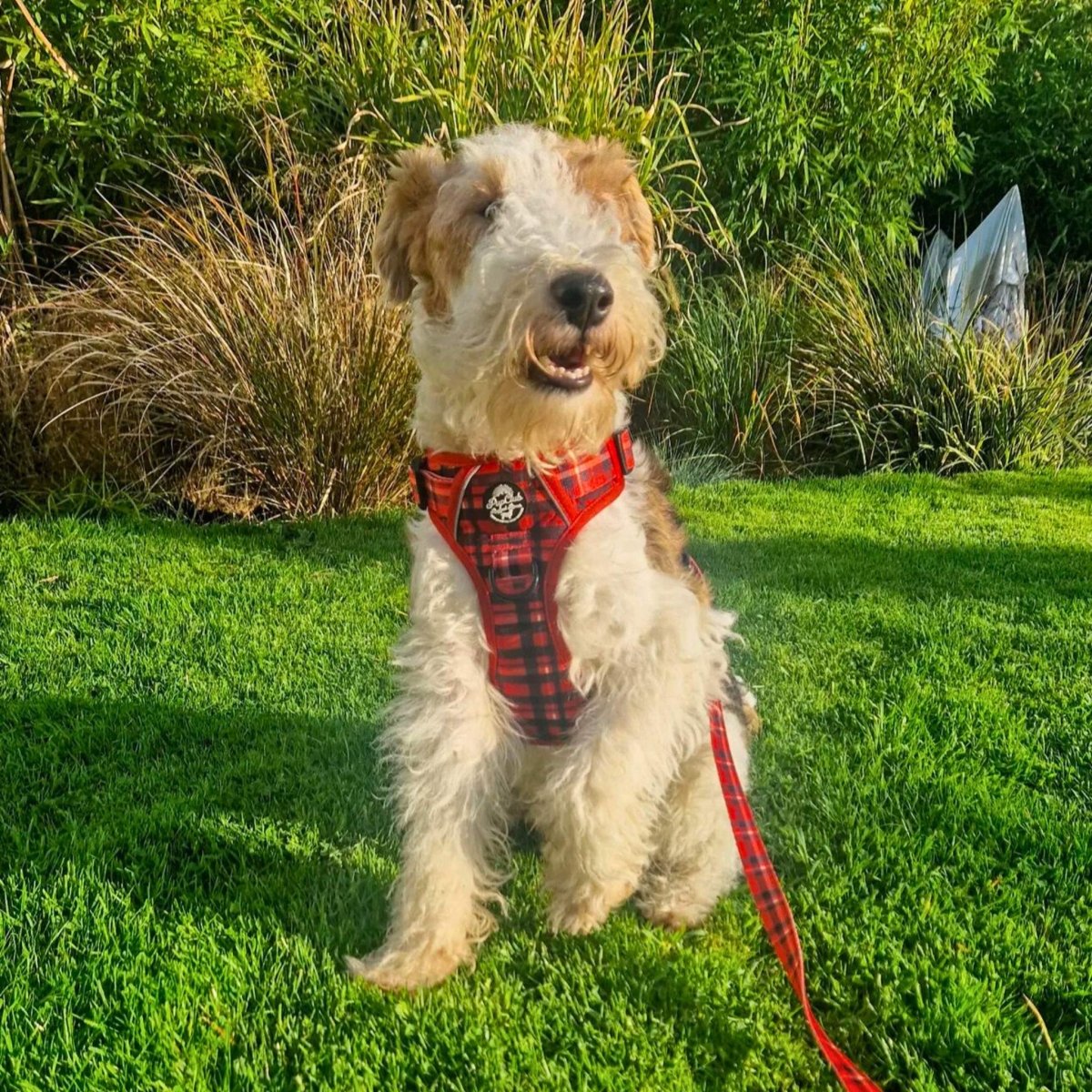
Our Rugged Rover Dog Harness Collection features the best no pull harnesses for small dogs available in the UK. Specially designed with front and back attachment points, these harnesses give you gentle control while teaching your small dog proper walking manners. The padded chest plate distributes pressure evenly to prevent strain on your dog's delicate frame.
- Dual attachment points for versatile control
- Extra-padded chest section for comfort
- Ergonomic design prevents restriction of movement
- Reflective strips for visibility and safety
- Back Handel for close control
Luxury Collection
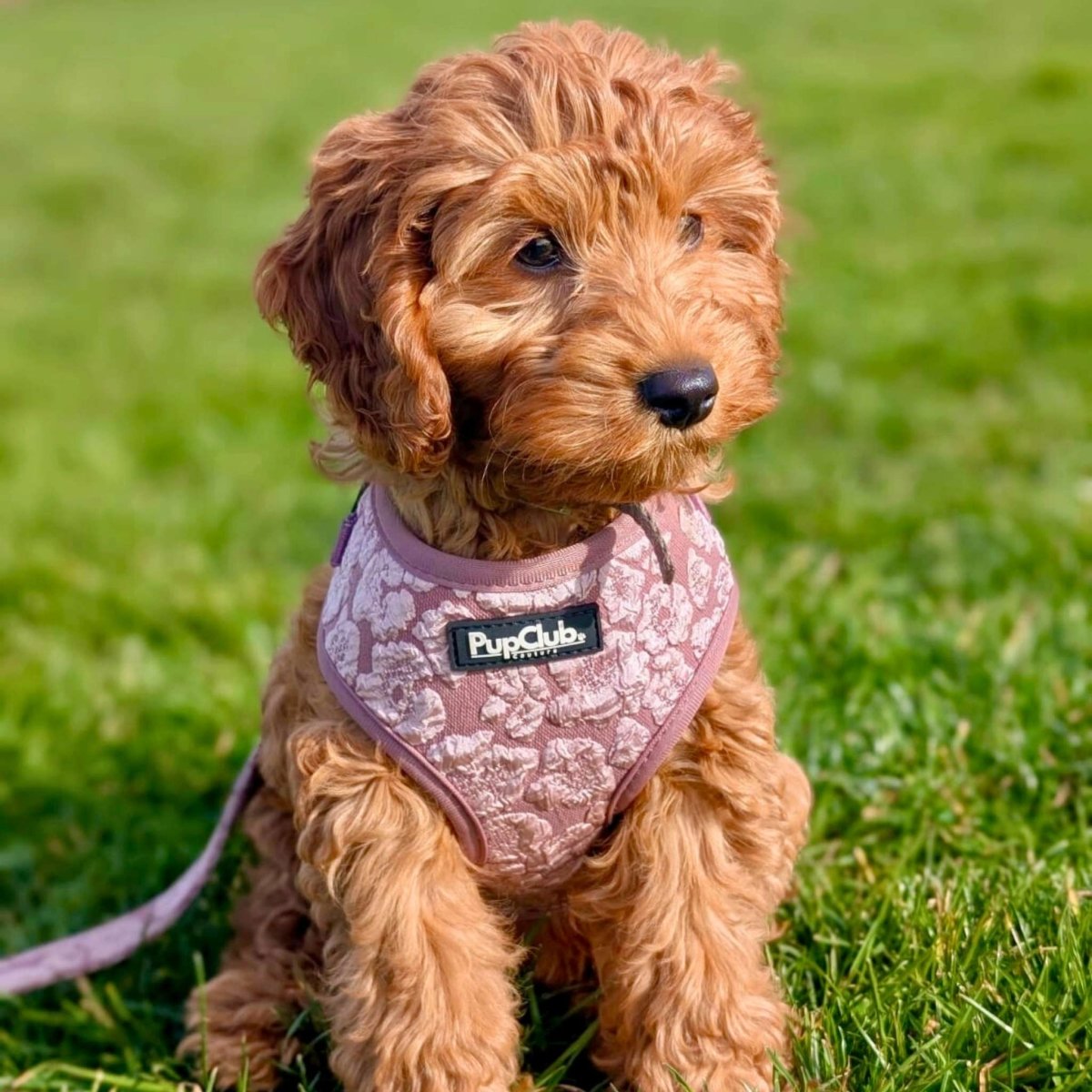
Make a statement with our Luxury Collection, featuring premium materials and eye-catching designs that don't compromise on safety. Each small dog harness in this collection combines our secure fit technology with elevated aesthetics—because your tiny companion deserves to look as good as they feel. From tweed to tartan and seasonal prints, these harnesses are the perfect fashion-forward choice.
- Premium fabric selections with reinforced stitching
- Our signature escape-proof design
- Matching leads and accessories available
- Gentle on sensitive skin and coats
What Makes the Safest Harness for Small Dogs?
Safety in a small-dog harness isn't a marketing claim — it's measurable against four criteria veterinary professionals actually check. Use this list when comparing any UK small-dog harness:
- 1. Tracheal protection — Y-front or chest-plate design that distributes lead force to the sternum, not the throat. Critical for Yorkies, Chihuahuas, Pomeranians (tracheal collapse risk) and brachycephalic breeds like Pugs and French Bulldogs.
- 2. Spinal protection — chest-cradling fit that supports rather than compresses the back. Critical for Dachshunds (IVDD), Bichons and any long-bodied small breed.
- 3. Escape resistance — lockable clasps + reinforced stitching. Small dogs that escape on a UK street can be in traffic in seconds.
- 4. Visibility — reflective trim. Small dogs are at car-bumper height in low light — reflective elements aren't optional, they're life-saving.
Every PupClub Couture small dog harness is engineered to meet all four criteria. We use steel-core hardware (not plastic), bartack-reinforced stitching at every load point, and CE-tested reflective webbing.
Small Dog Harness Sizing Guide
Getting the right size is crucial for your small dog harness to function properly. Our sizing is specifically calibrated for petite pooches, with extra attention to the proportions that make small breeds unique:
| Size | Chest Girth (cm) | Neck (cm) | Weight | Typical Breeds |
|---|---|---|---|---|
| XS | 26–40 cm | 26–34 cm | 2–4 kg | Chihuahua, Pomeranian, adult Yorkshire Terrier, Maltese, Toy Poodle |
| S | 35–66 cm | 30–45 cm | 4–8 kg | Miniature Dachshund, Shih Tzu, Bichon Frise, Jack Russell, Small Cavapoo |
| M | 40–71 cm | 35–50 cm | 8–15 kg | Standard Dachshund, Pug, French Bulldog, Cockapoo, Spanials, Collies |
| L | 55–83 cm | 40–60 cm | 15–25 kg | English Bulldog, large Cockapoo, Mini Aussie, Labrador, Staffy |
How to measure correctly
Use a soft tape measure. Chest girth: measure the widest point just behind the front legs while your dog is standing. Neck: measure where a collar would normally sit. Always add 2 cm for comfort and air-flow. If your dog is between sizes (very common with mixed breeds), size up and use the adjustment points — never size down.
How do I measure my small dog for a harness?
For the most accurate fit, measure your dog's chest girth (just behind the front legs) and neck circumference using a soft measuring tape. Take measurements while your dog is standing, and add 2cm to allow for comfort. Our detailed size charts provide the perfect match for your measurements, ensuring your small dog harness fits securely without restriction.
What if my dog is between sizes?
If your small dog falls between sizes, we generally recommend sizing up and using the adjustment points for a custom fit. All our small dog harnesses feature multiple adjustment points specifically designed for the unique proportions of petite breeds. This ensures that even the tiniest toy breeds or unusual body shapes (like Dachshunds) can find their perfect fit.
How tight should a small dog harness be?
The perfect fit for a small dog harness allows you to fit two fingers between the harness and your dog's body. This ensures it's snug enough to be secure while still comfortable for your dog. Too loose, and even the best escape proof small dog harness UK won't perform properly—too tight, and it could restrict movement or cause discomfort.

Customer Success Stories: Small Dogs Loving Their New Harnesses
Becky W. with Milo (Yorkshire Terrier)
"After trying 5 different harnesses that my escape artist Yorkie could wiggle out of, I finally found PupClub Couture's escape proof small dog harness. It's been a game-changer! The secure fit keeps him safe while still being comfortable enough that he doesn't try to get it off. The padded design doesn't rub his sensitive skin, and the adjustable straps give him the perfect custom fit."
James T. with Luna (Chihuahua)
"My Chihuahua used to pull constantly despite her tiny size, putting strain on her neck. The no pull harness for small dogs from PupClub Couture has completely transformed our walks. The front-clip option gently corrects her pulling, and she seems so much more comfortable. The size XS fits her 2kg frame perfectly with room to adjust as needed."
Emma L. with Teddy (Shih Tzu)
"Finding the best harness for small dogs with thick coats like my Shih Tzu was a challenge until I discovered PupClub Couture. The breathable mesh prevents overheating, the adjustable straps accommodate his fluffy chest, and the secure clasps keep him safe. The easy on/off design means no more struggling—which both Teddy and I appreciate!"
Frequently Asked Questions About Small Dog Harnesses
Why is a harness better than a collar for small dogs?
Small dogs have delicate tracheas that can be damaged by collar pressure. A properly fitted small dog harness distributes pressure across the chest and shoulders rather than the neck, reducing the risk of injury, especially for breeds prone to respiratory issues. Harnesses also provide better control and security for small dogs who might slip out of collars.
How do I stop my small dog from escaping their harness?
The key is using a properly designed escape proof small dog harness with multiple security points. Our harnesses feature lockable clasps, adjustable straps for a custom fit, and a unique design that prevents backward wiggling—the most common escape method for small dogs. Always ensure the harness is correctly fitted with just enough room for two fingers between the harness and your dog's body.
Can a small dog harness help with pulling?
Yes! A no pull harness for small dogs can significantly reduce pulling behavior. Front-attachment points help redirect your dog's momentum when they pull, making it an effective training tool. Our dual-clip design allows you to use both front and back attachment options depending on your training needs, providing versatility while protecting your small dog's delicate frame.
How often should I wash my small dog's harness?
We recommend washing your small dog harness every 2-3 weeks for regular use, or immediately if it becomes visibly dirty or develops an odor. All PupClub Couture harnesses are machine washable (gentle cycle in a mesh bag) and quick-drying, making maintenance simple. Regular cleaning helps prevent skin irritation, especially for small dogs with sensitive skin or allergies.
Do you offer harnesses for unusual small dog body types?
Absolutely! Our small dog harnesses are designed with the unique body shapes of various breeds in mind. From deep-chested breeds like Dachshunds to barrel-chested breeds like French Bulldogs, our multiple adjustment points allow for a customized fit. The harnesses distribute pressure evenly regardless of body shape, ensuring comfort and security for every small dog.
What is the safest harness for a small dog in the UK?
The safest small dog harness in the UK is a padded Y-front no-pull design with a lockable neck clasp, steel-core hardware, and reflective trim. These four features together protect against the most common small-dog risks: tracheal pressure (especially for Yorkies and Chihuahuas), spinal strain (Dachshunds), backwards-wiggle escape, and low-light visibility. Avoid plastic clasps and unpadded strap harnesses for any small breed.
What size harness does a Chihuahua, Yorkie or Pomeranian need?
Most adult Chihuahuas (1.5–3 kg) need XXS or XS — measure chest girth at 26–40 cm. Yorkshire Terriers (2–3.5 kg) almost always fit XS at 32–40 cm chest girth. Pomeranians vary more widely; a working measurement is the only reliable guide, ranging from XS to S. For all three breeds, always size by chest girth rather than published weight — many toy-breed harnesses fit on girth alone.
When can a puppy start wearing a harness?
Puppies can begin wearing a harness indoors from 8 weeks old for short, calm acclimatisation sessions, and on lead walks once fully vaccinated (typically 12–14 weeks in the UK). Start with XXS or XS depending on breed and re-measure chest girth every 3 weeks — small-breed puppies typically go through two harness sizes between 8 weeks and 6 months. Always pick a design with multiple adjustment points so it grows with the puppy.
Are step-in harnesses better than over-the-head harnesses for small dogs?
Step-in harnesses are better for head-shy dogs, young puppies, and toy breeds (Chihuahuas, Yorkies) that find pulling something over their head stressful. Over-the-head Y-front designs are better for active small dogs, brachycephalic breeds like Pugs and French Bulldogs (the Y-shape clears the throat), and dogs prone to pulling because they distribute force across a wider chest area. The most versatile design is a Y-front harness with a side clasp — this combines the airway-clearance of over-the-head with the ease of step-in application.
What is the most comfortable harness for a small dog with sensitive skin?
The most comfortable small dog harness for sensitive skin combines a soft-lined chest plate (mesh or soft cotton interior), bartack-reinforced stitching with no exposed seams against the body, and fine-grained adjustment so it sits without bunching. Maltese, Bichon Frises, Yorkies and Cockapoos all have skin or coats that mat or chafe quickly — for these breeds, look for harnesses where the under-arm area is fully padded and the chest panel is at least 4 cm wide to spread pressure evenly.
Can a small dog wear a harness all day?
No — harnesses should be removed when your small dog is indoors and not on lead. Long-coated breeds (Yorkies, Maltese, Shih Tzus) develop matting under any harness left on for more than 4–5 hours, and continuous wear can cause skin abrasion at the friction points. Use the harness for walks, car journeys and on-lead time, then take it off at home. Most owners find this routine takes 30 seconds with our lockable-clasp design.
Complete Your Small Dog's Walking Ensemble
A perfect small dog harness is just the beginning! Create a coordinated look with our matching accessories designed specifically for petite pooches:
- matching small dog leads: Lightweight, comfortable leads designed for small dog strength and comfort
- Matching small dog Collar: Padded & comfortable. Essential for all dogs
- Poo Bag Holders: Convenient accessories that attach directly to your small dog's harness
- Dog Walking Bags: Compact treat pouches and essentials bags for small dog walking outings
Ready to Transform Your Small Dog's Walking Experience?
Discover the best harness for small dogs designed with your petite companion's unique needs in mind. Secure, comfortable, and stylish—PupClub Couture's small dog harnesses tick every box for the all small dog parents.
Shop Now: Small Dog Harness Collection