

Dachshunds are adorable, courageous, comical dogs with a serious vulnerability: their long backs. That distinctive sausage shape isn't just cute—it's a structural challenge that makes Dachshunds the most prone to spinal injury of any breed. Up to 1 in 4 Dachshunds will experience IVDD (intervertebral disc disease) in their lifetime.
The right harness isn't just about controlling pulling—it's essential preventive healthcare for your Dachshund's spine. This guide covers everything you need to know: understanding IVDD and prevention strategies, choosing harnesses designed for long backs, proper sizing for their unique proportions, and complete care advice for keeping your Dachshund mobile and pain-free for life.

Understanding IVDD and Why Harnesses Matter
What is IVDD?
Intervertebral Disc Disease (IVDD) is a condition where the cushioning discs between vertebrae degenerate, bulge, or rupture. In Dachshunds, this often leads to:
- Severe back pain
- Loss of coordination in back legs
- Paralysis (temporary or permanent)
- Loss of bladder/bowel control
- Emergency surgery (£3,000-£8,000 in the UK)
- Lifelong mobility issues
Why Are Dachshunds So Vulnerable?
Dachshunds were selectively bred for short legs and long bodies to hunt badgers in underground burrows. This extreme body shape creates biomechanical stress:
- Disproportionate spine length: More vertebrae under stress with less support
- Short legs: Less shock absorption, more force transmitted to spine
- Genetic predisposition: Inherited disc degeneration (chondrodystrophy)
- Weight distribution: Long unsupported middle section bears disproportionate load
CRITICAL: Never Use Collars on Dachshunds
When a Dachshund pulls on a collar, the force doesn't just affect their neck—their long spine amplifies the torque all the way down their back. This single action can trigger disc herniation. Collars on Dachshunds aren't just uncomfortable—they're actively dangerous and dramatically increase IVDD risk.
Harnesses are not optional equipment for Dachshunds. They're essential spinal protection.
How Harnesses Protect Dachshund Backs
- Distribute forces safely: Pressure across chest and shoulders, not concentrated on neck/spine
- Prevent pulling trauma: Front-clip design stops pulling before spine strain occurs
- Support natural gait: Allow proper leg extension without spine compensation
- Reduce jumping: Handle allows you to lift safely rather than them jumping
- Enable controlled exercise: Safe walking means maintaining healthy weight (crucial for IVDD prevention)
Research Evidence: Studies show Dachshunds walked on harnesses from puppyhood have significantly lower IVDD rates than those walked on collars. While IVDD is largely genetic, environmental factors (collar use, obesity, jumping) are major preventable triggers.
Essential Features for Dachshund Harnesses
Not all harnesses protect Dachshund backs equally. Look for these specific features:
1. Proper Strap Spacing for Long Backs
This is the most critical feature for Dachshunds.
The girth strap (the strap around their body) must be positioned to avoid putting pressure on the mid-back area where most IVDD problems occur.
What to look for:
- Girth strap sits well behind front legs (not in armpits)
- Adequate space between neck and girth strap (proportional to their long body)
- No mid-back pressure point
- Strap doesn't restrict natural leg extension
Avoid: H-back harnesses or designs that create a pressure point right over the vulnerable mid-spine area.
2. Even Weight Distribution
Look for harnesses with broad contact patches rather than thin straps:
- Padded chest plate (distributes pressure)
- Wide girth strap (not thin cutting strap)
- Vest-style designs work well (distribute across larger area)
3. Front Clip Attachment (Essential)
Front-clip harnesses prevent pulling, which is crucial for Dachshunds:
- Pulling puts enormous strain on their long spine
- Front clip redirects pulling force safely
- Teaches loose-lead walking without spine stress
4. Secure, No-Shift Fit
Harness must stay in correct position during walking:
- Multiple adjustment points (minimum 3-4)
- Stays centered, doesn't rotate
- Straps don't slide during movement
- If harness shifts, pressure points move and can stress spine
5. Lightweight Construction
Dachshunds are small dogs—heavy equipment is burden on their backs:
- Choose lightest harness that's still durable
- Avoid bulky, over-engineered designs
- Every gram matters for small dogs with back problems
6. Easy On/Off Design
Struggling to put on harness can strain Dachshund backs:
- Step-in designs often easiest
- Quick-release buckles speed up process
- Less wrestling = less potential for injury
7. Lifting Handle (Recommended)
A sturdy back handle serves multiple purposes:
- Lift Dachshund safely onto furniture/into car (prevents jumping)
- Emergency control if they try to chase something
- Support during vet examinations
- Assistance up steps if back problems develop

Dachshund Harness Sizing Guide
Dachshunds are uniquely challenging to size due to their disproportionate body shape:
The Three Dachshund Sizes
| Type | Weight | Chest Girth | Typical Harness Size |
|---|---|---|---|
| Kaninchen (Rabbit) | Under 3.5kg | 28-35cm | XXS or XS |
| Miniature | 4-6kg | 32-40cm | XS |
| Standard | 7-12kg | 40-50cm | Small (sometimes Medium if stocky) |
Weight Warning: Many pet Dachshunds are overweight, which massively increases IVDD risk. If your Dachshund is heavier than breed standard, work with your vet on weight loss. Proper weight is critical for back health—even 500g extra puts significant strain on their spine.
How to Measure Your Dachshund
Dachshunds require three measurements, not just two:
- Chest girth (most important): Measure around widest part of ribcage, just behind front legs. Dachshunds have barrel-shaped chests—don't underestimate this measurement.
- Neck circumference: Measure at base of neck where collar would sit.
- Body length: Measure from base of neck to base of tail along spine. This helps determine if strap spacing is appropriate.
Complete measuring instructions: How to Measure Your Dog for a Harness UK
The Dachshund Sizing Challenge
Problem: Most harnesses are designed for "average" dog proportions (body length roughly 1.5x chest girth). Dachshunds have body length 2-3x chest girth.
This means:
- Standard harnesses may have straps too close together
- The girth strap might sit too far forward
- You may need to size up for adequate strap spacing
Solution: Look for:
- Harnesses with maximum adjustability
- Brands that specifically test on long-backed breeds
- Step-in designs (often better strap spacing than overhead)
- Reviews from other Dachshund owners
Coat Type Considerations
Dachshunds come in three coat types, affecting sizing:
| Coat Type | Sizing Consideration |
|---|---|
| Smooth (Short Hair) | Measure directly on skin, most accurate |
| Long Hair | Compress coat when measuring, add 1-2cm for comfort |
| Wire Hair | Measure through coat, texture may affect strap grip |
Checking the Fit
A properly fitted Dachshund harness:
- Fits two fingers under every strap (snug but not tight)
- Girth strap sits behind front legs, not in armpits
- Doesn't restrict leg extension during walking
- Stays centered on body, doesn't rotate
- No gaps where Dachshund could back out
- No rubbing or chafing after 10-minute walk
Regular Fit Checks: Check harness fit monthly. Dachshunds are prone to weight fluctuation (especially if they sneak treats!), and even small weight changes affect harness fit. A harness that's too loose can shift and create pressure points; too tight restricts breathing and movement.

Complete IVDD Prevention Strategy
The right harness is just one part of protecting your Dachshund's back. Complete prevention includes:
1. Harness for All Walks (Non-Negotiable)
- Never use collar for walking—not even "just this once"
- Put harness on before door opens (prevents pulling from excitement)
- Use front clip to prevent pulling completely
2. Prevent Jumping (Critical)
Jumping up and down from furniture causes repeated micro-trauma to discs:
- Use ramps or steps: For sofas, beds, car (essential, not optional)
- Block furniture access: If they won't use ramps, block access
- Lift them: Use harness handle to lift safely
- Train "wait": Teach them to wait for help up/down
3. Maintain Ideal Weight
This is crucial. Overweight Dachshunds have dramatically higher IVDD rates:
- You should easily feel ribs with light touch
- Visible waist when viewed from above
- Tummy tucks up (doesn't drag)
- Work with vet if weight loss needed
4. Controlled Exercise
- Appropriate duration: 30-45 minutes daily split into 2-3 walks
- Avoid excessive running: Bouncing gait stresses spine
- No rough play: Wrestling, sudden twisting movements dangerous
- Swimming excellent: Low-impact exercise (if they'll tolerate it)
5. Support When Lifting
Never pick up Dachshunds by front legs or scruff.
Correct method:
- One hand under chest, one under hindquarters
- Keep spine horizontal and supported
- Bring to your chest for security
- Or use harness handle with support under rear
6. Early Signs of IVDD (Know These!)
Seek immediate vet care if you notice:
- Reluctance to jump or climb stairs
- Yelping when touched or picked up
- Hunched back or tense posture
- Weakness in back legs
- Dragging back feet or knuckling
- Loss of coordination
- Incontinence or difficulty toileting
IVDD is a Medical Emergency: If your Dachshund shows any signs of back pain or leg weakness, see a vet IMMEDIATELY. Hours matter—early intervention (within 24-48 hours) dramatically improves outcomes. Emergency surgery may be needed. Do not "wait and see."
Training Your Dachshund to Walk on a Harness
Dachshund Personality and Training
Dachshunds are:
- Stubborn: Bred to work independently hunting badgers
- Food-motivated: Use this to your advantage
- Smart but selective: They decide if training is worth their effort
- Easily distracted: Strong prey drive and scent focus
Introducing the Harness
- Days 1-2: Let Dachshund investigate harness, reward interest
- Days 3-4: Put harness on loosely indoors, give treats immediately, remove after 30 seconds
- Days 5-6: Harness on before meals or favorite activities
- Day 7+: Begin short walks in harness
Loose-Lead Walking Training
Why it matters for Dachshunds: Every pull strains their spine. Teaching loose-lead walking is preventive healthcare.
Method:
- Front clip attachment: Essential for training phase
- Stop when lead tightens: Dachshunds learn this quickly (they're smart)
- High-value treats: Real chicken, cheese—whatever motivates YOUR Dachshund
- Short sessions: 5-10 minutes, 2-3 times daily (low stamina dogs)
- Be patient: Stubbornness is breed trait, not defiance
Complete training guide: Front Clip Dog Harness Training Guide
Dachshund Training Tip: Make training a game, not a chore. Dachshunds respond better to fun, food-motivated training than repetitive drill. Use variety, keep it interesting, and end on success. They'll cooperate when they believe it's their idea!

All Dachshund Varieties: Harness Considerations
Size Varieties
Kaninchen (Rabbit) Dachshunds
- Challenges: Tiny size, limited harness options
- Solutions: Look for XXS or toy breed harnesses with maximum adjustability
- Special care: Even more fragile than other Dachshunds
Miniature Dachshunds
- Most common: Best selection of appropriate harnesses
- Typical size: XS, occasionally Small
- Same IVDD risk: All prevention strategies apply
Standard Dachshunds
- Larger but still vulnerable: Longer spine = more at risk in some ways
- Typical size: Small, occasionally Medium for stocky individuals
- More strength: May pull harder, front clip essential
Coat Varieties
Smooth (Short Hair)
- Easiest to fit (see body shape clearly)
- Harness straps sit directly on skin
- Check for rubbing more frequently (no coat cushioning)
Long Hair
- Coat can cushion harness straps
- Check for matting under straps
- May need more frequent brushing around harness areas
- Compress coat when measuring for accurate fit
Wire Hair
- Coarse coat texture may prevent strap slippage
- Check coat doesn't affect buckle function
- May need hand-stripping around harness contact points
Related Small Breed Guides

Frequently Asked Questions About Dachshund Harnesses
What size harness does a Dachshund need?
Dachshunds typically need XS to Small harnesses, but size varies by type. Miniature Dachshunds (4-6kg) usually need XS with chest girth 32-40cm. Standard Dachshunds (7-12kg) typically need Small with chest girth 40-50cm. Kaninchen (rabbit) Dachshunds under 3.5kg need XXS if available. Always measure body length as well as chest girth—Dachshunds need harnesses with adequate strap spacing to avoid pressure on their long backs.
Should Dachshunds wear collars or harnesses?
Dachshunds must wear harnesses for walks, never collars. Their long backs and short legs create unique biomechanics where collar pressure doesn't just affect the neck—it puts dangerous strain on the entire spine, dramatically increasing IVDD (intervertebral disc disease) risk. Collars on Dachshunds can cause disc herniation, paralysis, and permanent spinal damage. Use a lightweight collar for ID tags only, always attach the lead to a harness.
What type of harness is best for preventing IVDD in Dachshunds?
The best IVDD-prevention harness for Dachshunds has these features: (1) Proper strap spacing—straps positioned to avoid mid-back pressure on long spine, (2) Even weight distribution across chest and shoulders, not concentrated at one point, (3) No restriction of natural gait, (4) Secure fit that doesn't shift during walking, (5) Front clip attachment to prevent pulling which strains the spine. Step-in harnesses or vests that distribute pressure broadly work better than H-back styles that create pressure points on long backs.
How do I measure a Dachshund for a harness?
Measure Dachshunds carefully accounting for their unique proportions. Measure chest girth at the widest point behind front legs (most important), neck circumference at base of neck, and critically—body length from base of neck to base of tail. Dachshunds have barrel-shaped chests and long bodies, so standard sizing may not fit. Look for harnesses designed for long-backed breeds or with extensive adjustability. The girth strap must sit well behind the front legs to avoid armpit pressure and allow proper leg extension.
Can harnesses prevent back problems in Dachshunds?
While harnesses cannot prevent IVDD entirely (it's primarily genetic), they significantly reduce risk factors. Proper harnesses prevent the neck and spine trauma that collars cause, distribute forces safely during walks, prevent pulling-related spine strain, and support proper gait mechanics. Combined with maintaining healthy weight, avoiding jumping, using ramps, and controlled exercise, harnesses are essential preventive equipment. Dachshunds using harnesses from puppyhood have lower IVDD incident rates than those walked on collars.
Best Harness for Dachshunds: Our Recommendations
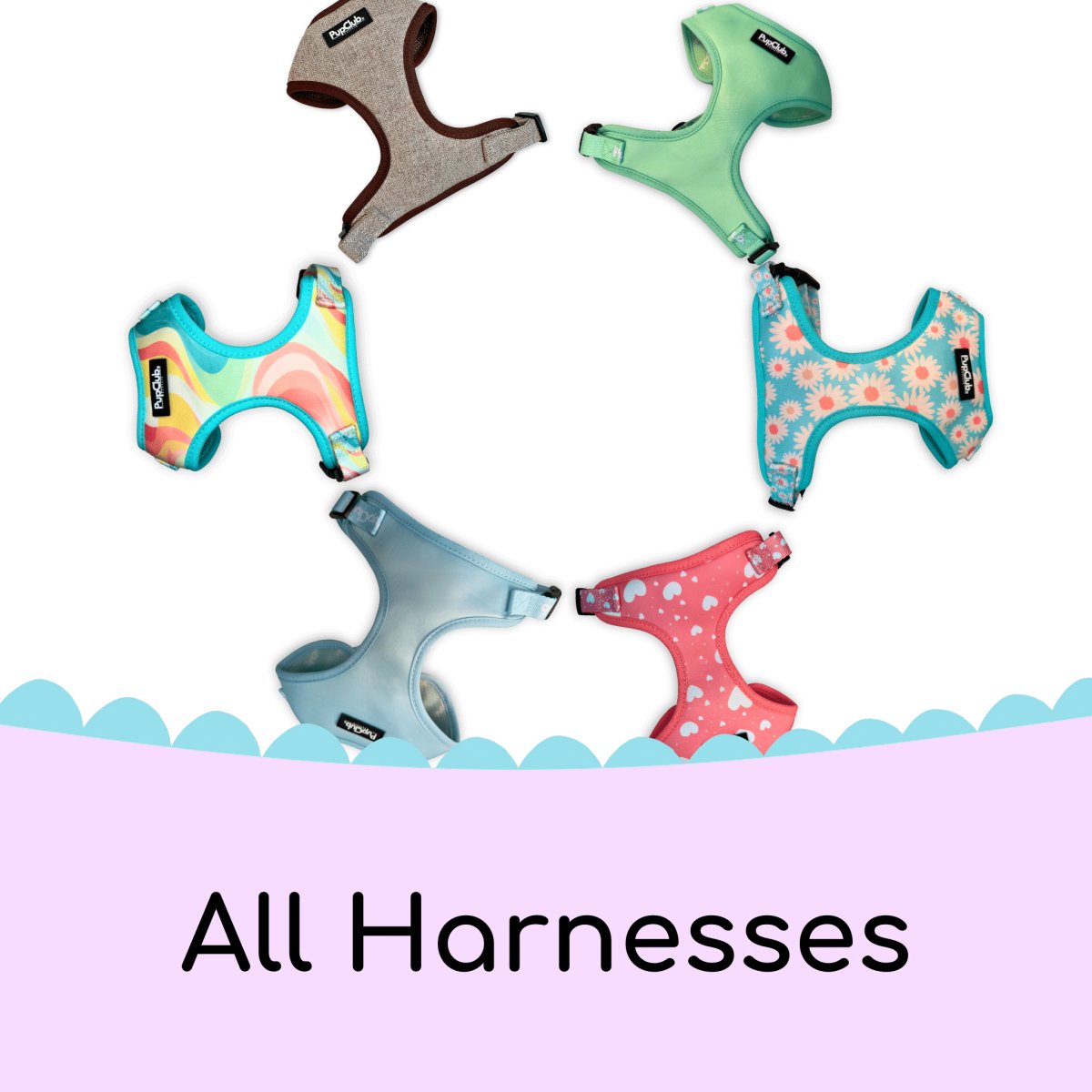
🏆 Best for Dachshunds: Adjustable Step-In Harness (XS or Small)
Designed for proper weight distribution on long backs
- Step-in design - Easy application, no struggling that could hurt backs
- Proper strap spacing - Positioned for long-backed breeds
- Multiple adjustment points - Accommodates barrel-shaped Dachshund chests
- Front attachment - Prevents pulling and spine strain
- Lightweight construction - Won't burden small dogs
- Even weight distribution - Padded chest plate spreads pressure
- Secure fit - Escape-proof for determined Dachshunds
- Machine washable - Essential for dogs close to ground
Suitable for: All Dachshund varieties—Miniature (XS), Standard (Small)
Shop Adjustable Harnesses →Size Guidance:
- XS: Miniature Dachshunds, chest 32-40cm, 4-6kg
- Small: Standard Dachshunds, chest 40-50cm, 7-12kg
- Between sizes? Size up for proper strap spacing on long bodies
Always measure using our complete measuring guide.
Final Thoughts: Protecting Your Dachshund's Back
Dachshunds are wonderful companions with big personalities in small, vulnerable packages. Their backs are their Achilles heel—but with proper care, most Dachshunds can live full, active, pain-free lives.
Essential IVDD Prevention:
- Always use harness, never collar for walking
- Prevent jumping (ramps/steps everywhere)
- Maintain ideal weight religiously
- Controlled exercise appropriate to build
- Know early warning signs, act immediately
The right harness is preventive healthcare that costs £15-30 but could save you thousands in vet bills and, more importantly, spare your Dachshund years of pain. It's not optional—it's essential.
Your Dachshund depends on you to protect their back. The right harness is one of the most important investments you'll make.
Protect Your Dachshund's Back Today →Essential Guides
- Complete No Pull Harness Guide UK
- Front Clip Harness Training Guide
- How to Measure Your Dog for a Harness
- Best Puppy Harness Guide (for Dachshund puppies)
Shop by Collection


