

Pugs are one of Britain's most beloved breeds—and one of the breeds that desperately needs a harness for safety. This isn't about fashion or convenience. For brachycephalic (flat-faced) breeds like Pugs, harnesses are a critical medical tool that protects their compromised airways and prevents tracheal collapse.
In this essential guide, we'll explain exactly why collars are dangerous for Pugs, how to choose a harness that protects their breathing, proper sizing for their compact build, and training techniques that work with their food-motivated but stubborn personality. Whether you have a puppy or senior Pug, this guide will help you keep them safe.

Why Pugs MUST Wear Harnesses (Not Collars)
For most breeds, we recommend harnesses over collars. For Pugs, harnesses are a life-or-death medical necessity. Here's why:
Brachycephalic Airway Syndrome
Pugs are severely brachycephalic—their extremely flat faces create dangerous breathing challenges:
- Stenotic nares: Pinched nostrils that severely restrict airflow
- Elongated soft palate: Excess tissue that blocks the back of the throat
- Hypoplastic trachea: Abnormally narrow windpipe (one of the smallest among dogs)
- Everted laryngeal saccules: Tissue that gets sucked into the airway during breathing
- Laryngeal collapse: Progressive weakening of the voice box structure
CRITICAL WARNING: Collars Kill Pugs
Pugs have the most compromised airways of any common UK breed. Even the lightest collar pressure can cause acute respiratory distress, fainting, permanent tracheal collapse, or death. UK veterinary emergency services report that Pugs are disproportionately represented in collar-related injuries. This is 100% preventable with a harness.
Tracheal Collapse: A Pug's Greatest Risk
Pugs are the breed most prone to tracheal collapse—a progressive condition where the windpipe becomes increasingly flattened.
Early symptoms include:
- "Goose honk" cough (classic sign)
- Gagging or retching, especially when excited
- Difficulty breathing during exercise
- Increased snorting and wheezing
- Exercise intolerance (tiring quickly)
Advanced symptoms include:
- Cyanosis (blue-tinged gums/tongue)
- Collapse or fainting
- Panic and severe distress
- Inability to breathe lying down
Collar pressure is the primary preventable cause of tracheal collapse progression. A harness eliminates this risk entirely.
If your Pug makes a "honking" cough: Contact your vet immediately. This indicates tracheal irritation or early collapse. Switch to a harness today—continuing collar use will make it worse.
Eye Proptosis (Eye Bulging)
Pugs have extremely prominent eyes that can literally pop out of their sockets (proptosis). Collar pressure increases intraocular pressure and can contribute to this horrific injury.
A harness completely eliminates any pressure on the head and neck, protecting those vulnerable eyes.
Heat Intolerance
Pugs cannot effectively cool themselves. They pant to regulate temperature, but their short airways make this terribly inefficient.
Why harnesses help:
- Zero neck pressure = easier breathing when panting
- Breathable materials prevent body heat buildup
- Proper fit doesn't restrict chest expansion
- Front clips prevent heavy panting from pulling
UK Summer Warning: Pugs can develop heat stroke in temperatures as low as 18-20°C. NEVER walk Pugs in warm weather. Early morning (before 8am) or late evening (after 8pm) only. Carry water always. Watch for excessive drooling, stumbling, or bright red gums—these are emergencies.

The Real Risks: Why Collars Are Deadly for Pugs
Veterinary data consistently shows Pugs as one of the highest-risk breeds for collar-related injuries. Let's be clear about what happens:
| Risk Factor | With Collar | With Harness |
|---|---|---|
| Tracheal Collapse | ❌ Extremely high risk—Pugs are most vulnerable breed | ✅ Zero tracheal pressure |
| Breathing Difficulty | ❌ Compresses already critically narrow airways | ✅ No airway interference whatsoever |
| Heat Stress | ❌ Restricts cooling, increases emergency risk | ✅ Allows maximum air exchange |
| Eye Injury (Proptosis) | ❌ Can cause eyes to bulge or dislocate | ✅ No head/neck pressure |
| Spinal Damage | ❌ Pugs prone to neck/spine issues | ✅ Distributes force across chest |
| Collapse/Fainting | ❌ Can cause loss of consciousness | ✅ Safe for all activity levels |
What UK Vets Say: The British Veterinary Association specifically identifies Pugs as a breed requiring harnesses, not collars. The Kennel Club's breed health information for Pugs explicitly recommends harnesses. This is medical consensus, not opinion.
The only acceptable collar use for Pugs: A lightweight flat collar with ID tags for legal compliance, never attached to a lead. Harness for walking, collar for identification only.
How to Choose the Best Harness for Your Pug
Pugs have specific requirements that generic small dog harnesses often don't meet:
Essential Features for Pug Harnesses
- Ultra-Breathable Materials: Mesh is essential—Pugs overheat in minutes
- Lightweight Construction: Heavy harnesses restrict movement and trap heat
- Padded, Wide Straps: Distribute pressure across their compact body
- Dual D-Ring System: Front for training (zero neck pressure), back for casual walks
- Easy On/Off Design: Step-in or quick-release—Pugs can be impatient
- Maximum Adjustability: Pugs vary hugely in build (athletic to overweight)
- No Overhead Application: Reduces stress and protects facial structure
- Machine Washable: Pugs shed heavily and get dirty
Materials: Choose Carefully
| Material | Pros for Pugs | Cons |
|---|---|---|
| Mesh-Lined Nylon | Excellent breathability, lightweight, prevents overheating, quick-drying | Shows dirt (but washable) |
| Soft Padded Nylon | Comfortable, durable, easy to clean | Less breathable—ensure air holes/panels |
| Avoid: Neoprene | N/A | Traps heat—dangerous for brachycephalic breeds |
| Avoid: Leather | N/A | Heavy, poor breathability, overheating risk |
| Avoid: Thick/Heavy Fabrics | N/A | Restrict movement, trap heat, uncomfortable |
For UK Climate and Pug Health: Choose ultra-breathable mesh-lined nylon even in winter. Pugs overheat year-round due to their breathing issues. What feels "cool" to you can be dangerously hot for a Pug. Breathability isn't a luxury—it's a survival requirement.

Pug Harness Sizing Guide
Pugs are compact but stocky, and sizing can be tricky. Here's how to get it right:
Understanding Pug Body Shape
Pugs have:
- Compact, square build: Height roughly equals length
- Deep chest: Wider than you'd expect for their size
- Thick neck: Disproportionate to body size
- Short legs: Low center of gravity
- Heavy bone structure: Weigh more than they look
- Prone to obesity: Overweight Pugs need larger sizes
This means: Weight alone won't tell you harness size. You absolutely must measure.
How to Measure Your Pug
- Chest girth (most critical): Measure around the widest part of the ribcage, just behind the front legs
- Neck circumference: Measure at the base of the neck where a collar sits
- Length: Base of neck to base of tail (if harness specifies)
- Weight: Secondary guide only—measurements are what matters
Measuring Overweight Pugs: If your Pug is overweight (vet can confirm), measure carefully. An overweight 9kg Pug may have the chest girth of a 12kg dog. Always measure—never assume based on weight. Proper harness fit is even more critical for overweight dogs.
Typical Pug Sizing
| Pug Type | Weight | Chest Girth | Typical Size |
|---|---|---|---|
| Small/Lean Female | 6-7kg | 38-44cm | Small |
| Average Female | 6.5-8kg | 42-48cm | Small to Medium |
| Average Male | 7-8.5kg | 44-50cm | Small to Medium |
| Large/Stocky Male | 8-9kg | 48-54cm | Medium |
| Overweight Pug | 9-11kg | 50-58cm | Medium (size up for chest) |
| Puppy (3-6 months) | 3-5kg | 30-40cm | XS to Small |
| Puppy (6-12 months) | 5-7kg | 38-46cm | Small |
Checking the Fit
A properly fitted Pug harness should:
- Two-finger rule: Fit two fingers comfortably under straps
- Chest plate position: On breastbone, nowhere near throat
- Breathing check: No change in breathing sounds when harness is on
- Girth strap placement: Behind front legs, not in armpits
- No facial interference: Straps clear of face wrinkles
- Freedom of movement: Pug can walk, sit, lie down naturally
- No rotation: Stays centered during activity
Post-Fit Breathing Test: After fitting the harness, let your Pug rest for 2 minutes, then watch them breathe. Listen for any increase in snorting, wheezing, or labored breathing. If you notice ANY change in breathing sounds, the harness is too tight or positioned wrong. Loosen and readjust immediately.

Best Harness for Pug Puppies
Pug puppies are extraordinarily vulnerable. Their tracheas are soft and developing—collar damage now affects them for life.
Why Puppy Pugs Are Highest Risk
- Softer trachea: Cartilage hasn't fully hardened yet
- Rapid growth: Trachea developing during critical period
- Excitable behavior: Sudden lunges and pulls
- Learning boundaries: Don't yet understand pulling consequences
- Heat vulnerability: Even less able to cool themselves than adults
Puppy Harness Requirements
- Ultra-lightweight: Heavy harnesses affect developing gait
- Extreme adjustability: Puppies grow unevenly and quickly
- Ultra-breathable: Puppies overheat faster than adults
- Soft materials: Gentle on delicate skin and cartilage
- Easy on/off: Wiggly puppies need quick application
Pug Puppy Growth Timeline
| Age | Weight Range | Harness Size | What to Expect |
|---|---|---|---|
| 8-12 weeks | 1.5-3kg | XS | First harness, gentle introduction |
| 3-6 months | 3-5kg | XS to Small | Rapid growth, weekly adjustments |
| 6-9 months | 5-7kg | Small | Growth slowing, approaching adult size |
| 9-12 months | 6-8kg | Small to Medium | Nearly full size, adult harness soon |
Budget Reality: Expect to buy 2-3 harnesses in your Pug's first year. This is unavoidable but essential. Tracheal damage from collar use requires surgery costing £1,000-£3,000. Proper harnesses from day one are the best investment you'll make.
Introducing Puppies to Harnesses
Pugs are food-motivated—use this:
- Harness = treats: Show harness, give treat. Repeat 10 times.
- Touch and treat: Touch puppy with harness, treat immediately
- Quick on/off: Put on harness, continuous treats, remove after 20 seconds
- Meal association: Feed all meals while puppy wears harness indoors
- Gradual duration: Build to 5-10 minutes before walking
- First walk: 2-3 minutes only, end on positive note
Training Pugs to Walk on a Harness
Pugs are intelligent, food-motivated, but notoriously stubborn. Here's how to succeed:
Understanding Pug Temperament
- Highly food-motivated: Will do almost anything for treats
- Stubborn when bored: Keep training fun and short
- Sensitive: Harsh corrections cause shutdown
- Social and attention-seeking: Praise matters as much as treats
- Very low stamina: Can't train for long periods
- Heat-sensitive: Must train in cool conditions only
Front-Clip Training for Pugs
Week 1-2: Indoor Foundation
- 3-5 minute sessions: Pugs tire extremely quickly
- High-value treats: Real meat, cheese—Pugs LOVE food
- Cool environment essential: Air-conditioned if possible
- Stop when tight, move when loose: Perfect consistency required
- Reward every 3-5 steps: Frequent reinforcement
Week 3-4: Outdoor Practice (Cool Weather ONLY)
- Early morning or late evening: Never in warmth
- Quiet locations: Minimize distractions initially
- Carry water: Offer every 3-5 minutes
- Watch breathing constantly: Stop immediately if panting increases
- Keep positive: Pugs shut down if frustrated
Heat Emergency Signs: Heavy panting, excessive drooling, bright red gums, stumbling, glassy eyes, or disorientation mean STOP IMMEDIATELY. Move to shade, offer water, cool them down gently (wet towel on paws/belly), and contact your vet. Heat stroke kills Pugs quickly.
Managing Stubbornness
When your Pug plants themselves and refuses to move:
- Never drag: This damages trust and can injure them
- Trail of treats: Drop treats leading forward
- Happy voice: Enthusiasm is contagious to Pugs
- Change direction: Walk opposite way, reward when they follow
- Check for distress: "Stubborn" might mean "I can't breathe"
- Keep sessions fun: End on success, not frustration
Realistic Expectations: Pugs are not endurance walkers. A 15-20 minute calm walk is SUCCESS. Your goal is not hour-long hikes—it's short, safe walks that don't cause respiratory distress. Set expectations based on Pug anatomy, not Instagram posts of other breeds.

Health Considerations for Pugs in Harnesses
Beyond breathing, Pugs have other health issues that affect harness choice:
Pug Dog Encephalitis (PDE)
Pugs can develop neurological conditions. A harness with a back handle helps you assist your Pug if mobility becomes compromised.
Spinal Issues (IVDD)
Pugs are prone to intervertebral disc disease. Harnesses help by:
- Eliminating neck hyperextension from collar pulling
- Distributing force across chest, not spine
- Providing lift assistance via back handle
Hip Dysplasia and Arthritis
Common in Pugs, especially overweight ones. A back handle lets you:
- Assist with stairs
- Help in/out of cars
- Support hind end when needed
Obesity
Pugs are prone to obesity, which exacerbates every health issue. Proper harness fit is critical for overweight Pugs:
- Measure carefully—may need larger size for chest
- Ensure straps don't dig into fat rolls
- Check for skin fold irritation after walks
- Work with your vet on weight management
When to Contact Your Vet Urgently
Call immediately if you notice:
- New or worsening "honking" cough
- Any collapse or fainting
- Blue-tinged gums or tongue
- Severe respiratory distress
- Inability to cool down after walks
- Any eye bulging or displacement
Related Guides for Brachycephalic Breeds
- Complete No Pull Dog Harness Guide UK
- Front Clip Dog Harness UK 2026
- Best Harness for French Bulldogs (Similar Needs)
- Best Harness for Small Breeds
Other Breed Guides

Frequently Asked Questions About Pug Harnesses
What size harness does a Pug need?
Most Pugs wear a Small or Medium harness depending on their build. Females typically need Small (6-8kg, 38-48cm chest), while larger males often need Medium (7-9kg, 45-52cm chest). Always measure your Pug's chest girth before ordering, as they vary significantly in build. Some stocky Pugs may need to size up for proper chest fit despite their weight.
Why can't Pugs wear collars?
Pugs are brachycephalic (flat-faced) with compromised airways and are extremely prone to tracheal collapse. Collars put dangerous pressure on their already vulnerable trachea, which can cause breathing difficulties, collapse, or permanent damage. Harnesses are a medical necessity for Pugs. They distribute pressure safely across the chest, protecting the trachea and allowing better breathing.
What is the best harness for a Pug that pulls?
The best harness for a Pug that pulls is a dual D-ring harness with front and back attachment points. The front clip discourages pulling during training without any neck pressure, while the back clip allows comfortable walking once pulling improves. Choose breathable, lightweight materials and ensure the harness doesn't restrict their already limited breathing capacity.
Will a harness help my Pug breathe better?
While a harness cannot fix Pug's anatomical breathing problems, it prevents additional breathing difficulties caused by collar pressure on the trachea. A properly fitted harness eliminates all pressure on the neck and airways, allowing your Pug to breathe as well as their anatomy permits. Choose breathable materials and ensure nothing restricts chest expansion during breathing.
At what age can Pug puppies wear a harness?
Pug puppies should wear harnesses from their first walks at 8-10 weeks old. Never use collars on Pug puppies—their tracheas are even more delicate than adults and extremely prone to collapse. Choose a lightweight XS or Small adjustable harness. Introduce it gradually with treats and positive reinforcement. Expect to size up 1-2 times as your Pug grows to full size around 12 months.
Final Recommendations: Best Harnesses for Pugs
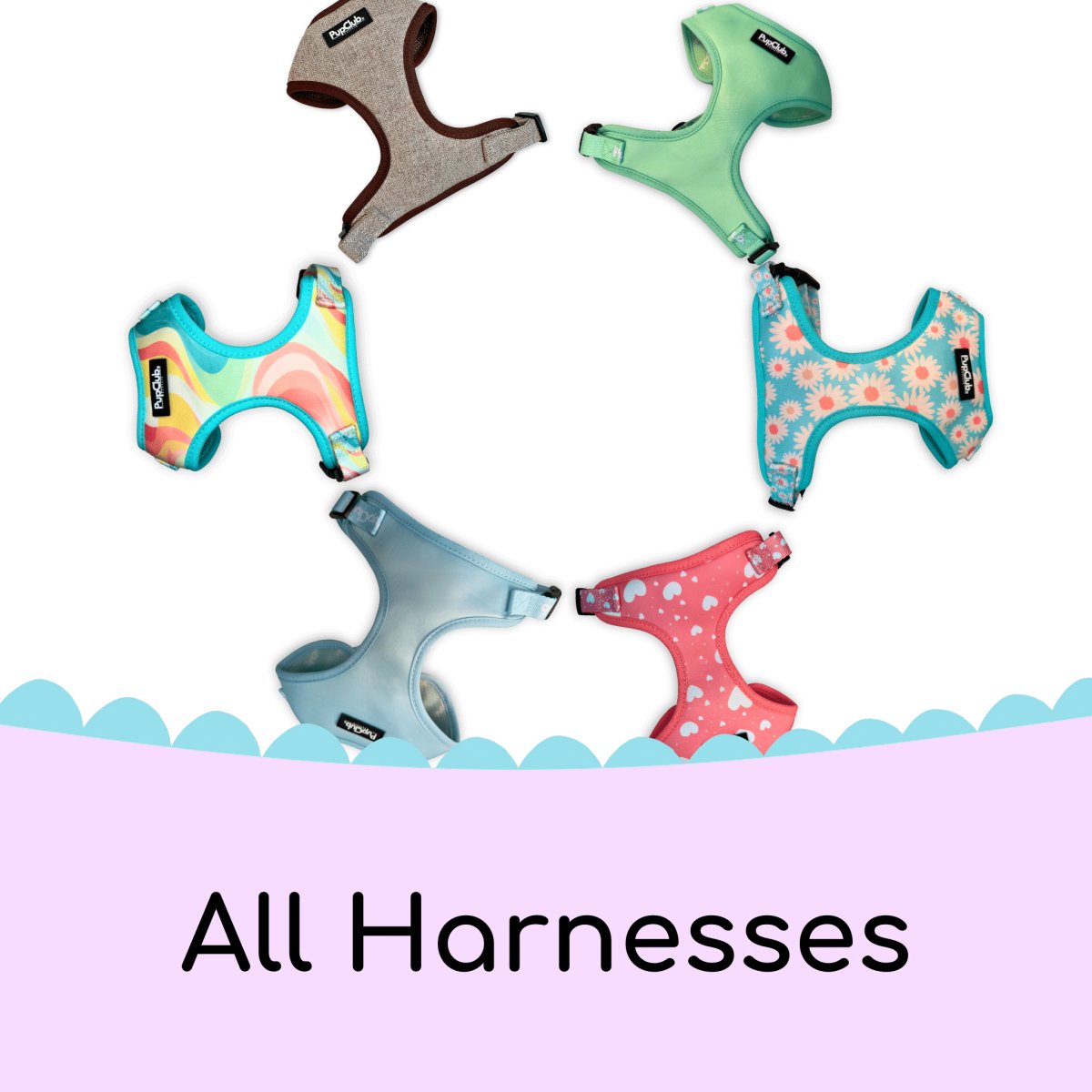
🏆 Our Top Pick: Adjustable Step-In Harness (Small/Medium)
Perfect for most adult Pugs
- Ultra-lightweight design - Ideal for small brachycephalic breeds
- Maximum breathability - Prevents overheating in heat-sensitive Pugs
- Step-in style - No overhead application, less stressful
- Soft, padded straps - Gentle on sensitive skin
- Front attachment option - Training support without tracheal pressure
- Fully adjustable - Accommodates varying Pug builds (lean to stocky)
- Machine washable - Easy to keep clean with shedding
- Quick-release buckles - Easy emergency removal
Suitable for: Pugs 6-9kg, all activity levels, perfect for brachycephalic safety
Shop Adjustable Harnesses →🐾 For Larger/Stocky Pugs: Rugged Rover™ Harness (Small Size)
Perfect for larger males or overweight Pugs
- Dual D-ring system - Front for training, back for casual walks
- Extra padding - Comfortable for stockier builds
- Breathable materials - Critical for Pug safety
- Back handle - Helpful for mobility assistance
- Durable construction - Handles enthusiastic pullers
- Adjustable fit - Accommodates larger chest measurements
Suitable for: Pugs over 8kg, stocky builds, those needing extra support
Shop Rugged Rover™ Small Size →Life-Saving Reminder: Collars are not safe for Pugs under ANY circumstances for walking. This is not a training preference—it's a medical fact. Pugs are the breed most prone to tracheal collapse in the UK. Every year, Pugs die or require emergency surgery due to collar use. Protect your Pug's life: harness for walking, collar for ID tags only.
Final Thoughts: Your Pug's Life Depends on This Choice
Pugs are wonderful, characterful companions with unique medical needs. The right harness is not an accessory—it's life-saving medical equipment.
Remember these critical points:
- Harnesses are medically necessary, not optional
- Pugs are the breed most at risk for tracheal collapse
- Measure carefully—Pug builds vary dramatically
- Choose ultra-breathable materials—overheating kills
- Train with patience and lots of treats
- Never walk in warm weather—18°C+ is dangerous
- Never, ever attach a lead to a collar
Your Pug trusts you to keep them safe. A quality harness is the single most important safety investment you'll make.
Protect Your Pug Today →


3 comments
My pug doesn’t see very well. I need a harness with a handle on top to help her on stairs.
My pug doesn’t see very well. I need a harness with a handle on top to help her on stairs.
Can you please sendme some suitable harness for lifting a pug/dashund age 8 with disk and spinal injurey problems weight around10kg.