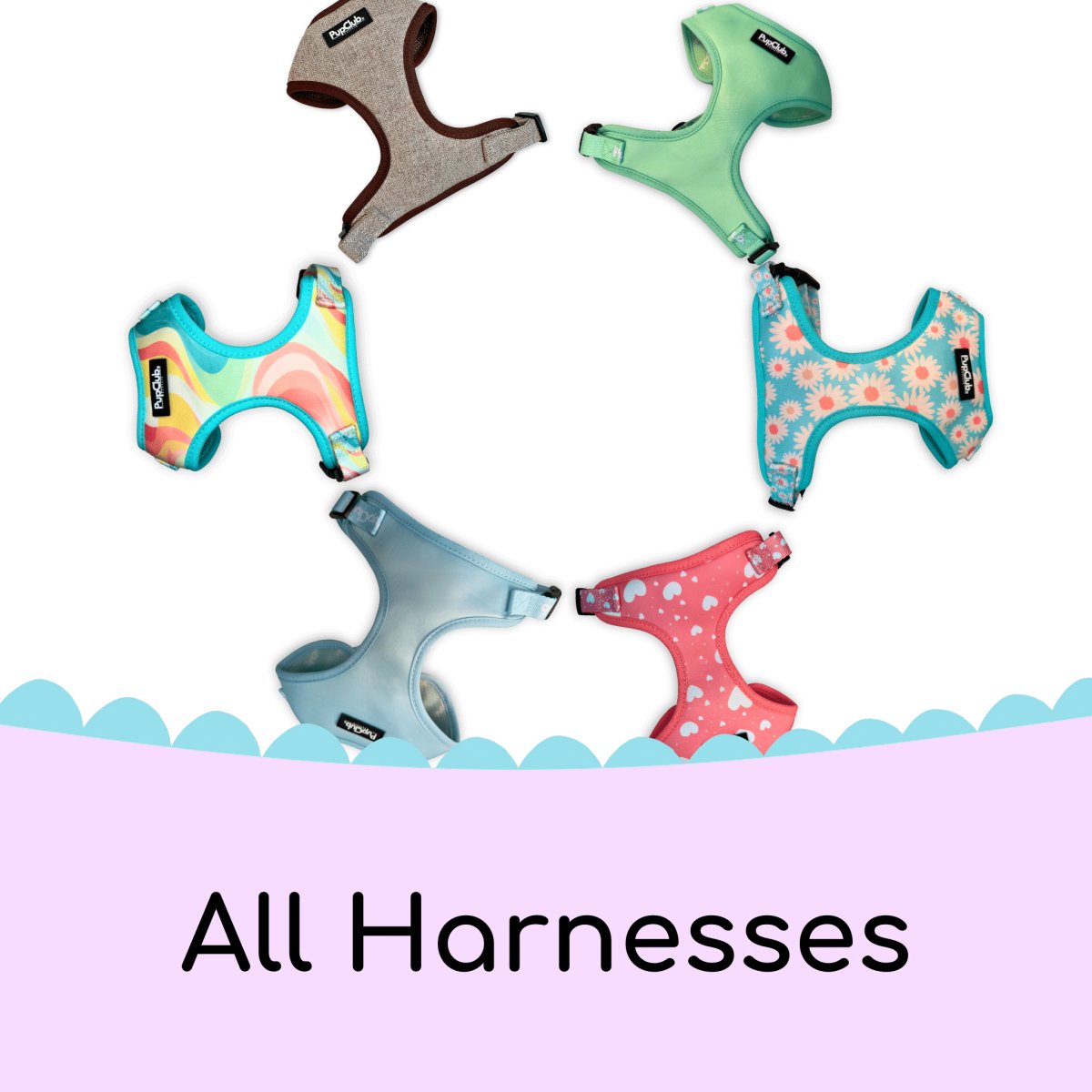


Looking for the perfect harness for your Poodle, Cockapoo, Cavapoo, Labradoodle, or any poodle mix? You're in the right place. From tiny Toy Poodles to giant Standard Poodles, and every curly-coated crossbreed in between, this complete UK guide covers everything you need to know.
We'll explain why poodles and poodle-mixes need specific harness features (hint: it's all about that beautiful curly coat), how to size correctly for each poodle variety and crossbreed, the best materials to prevent matting, and specific recommendations for Cockapoos, Cavapoos, Labradoodles, Goldendoodles, Maltipoos, and more. Whether you have a purebred Poodle or a poodle mix, this guide has you covered.

Why Poodles & Poodle Mixes Need Proper Harnesses
Quick answer: Poodles and poodle-mixes need harnesses (not collars) for walking because they're enthusiastic pullers with delicate tracheas, and their curly coats mat easily under poorly designed equipment. A properly fitted harness protects their neck, prevents coat damage, and gives you better control.
The Poodle Temperament: Athletic Water Retrievers
Don't let the fancy show clips fool you - Poodles were originally bred as water retrievers in Germany. Whether Toy, Miniature, or Standard, every Poodle carries that same intelligence, energy, and working drive. This means:
- High energy: Poodles need significant daily exercise
- Strong prey drive: Will pull toward birds, squirrels, water
- Intelligent but stubborn: Smart enough to pull when they want
- Water obsessed: Will lunge toward any water source
Young Poodles and poodle-mixes are particularly enthusiastic pullers. A collar puts all that forward momentum directly onto the trachea, which is especially dangerous for Toy and Miniature Poodles with smaller, more delicate windpipes. Even a single sharp lunge on a collar can cause lasting tracheal damage.
UK Veterinary Data: Small and medium poodles (Toys, Miniatures, and poodle-mix breeds under 15kg) are among the breeds most susceptible to tracheal collapse from collar pressure. Harnesses distribute force across the chest and shoulders, completely protecting the vulnerable throat.
The Poodle Coat Challenge
That beautiful, curly, non-shedding poodle coat creates a real harness challenge. A poorly designed harness will:
- Rub against tight curls creating mats and tangles underneath straps
- Pull and snag on fur when putting on or removing
- Create friction points that mat within days
- Cause discomfort once matting sets in (pulls at skin)
What poodles need: Padded straps with smooth lining that glide over curly fur rather than gripping it. This isn't a luxury - it's essential for coat health and your dog's comfort.
This applies to all poodle-mix breeds too: Cockapoos, Cavapoos, Labradoodles, Goldendoodles, Maltipoos, Bernedoodles, Aussiedoodles, and Sheepadoodles all inherit that curly coat texture and need the same smooth-lined harness design.

Collar vs Harness for Poodles: Use a flat collar with ID tags (UK legal requirement), but attach your lead to a harness for all walks. This gives you legal compliance plus safety and coat protection. Never walk poodles on collar alone.
Essential Harness Features for Poodles & Poodle-Mixes
Not every harness works well for curly-coated breeds. Here's what to look for:
1. Padded, Smooth-Lined Straps (Most Important)
The straps that sit against your dog's body need:
- Soft padding (neoprene, foam, or mesh)
- Smooth surface that glides over fur (not rough nylon webbing)
- No exposed stitching on the inside that snags curls
Why it matters: Rough, unlined straps mat a poodle coat within 2-3 walks. Once matting starts, it's incredibly difficult to brush out and causes genuine discomfort.
2. Full Adjustability (Multiple Points)
Poodles and poodle-mixes vary dramatically in size and build. You need:
- Adjustable neck strap (accommodate coat thickness changes)
- Adjustable chest strap (fit varies by build)
- 4+ adjustment points total for precise fit
Why it matters: A Cockapoo with Cocker Spaniel build looks completely different from one with Poodle build at the same weight. Standard Poodles range from 18kg to 32kg. Adjustability is essential.
3. Dual Clip Attachment (Front & Back)
Poodles and poodle-mixes are intelligent and can be stubborn pullers. You need:
- Front D-ring: For training and discouraging pulling (redirects dog toward you)
- Back D-ring: For relaxed walks once lead manners established
Why it matters: Front-clip attachment is invaluable for training young, bouncy poodles and Cockapoos who inherit strong pulling drives from both parent breeds.
More on this: Best No-Pull Dog Harness UK 2026
4. Quick-Drying, Waterproof Materials
Poodles love water - it's in their DNA. Your harness needs:
- Quick-dry construction (doesn't stay damp against coat)
- Weatherproof materials (UK rain, puddles, swimming)
- Breathable mesh panels (prevents overheating)
Why it matters: A harness that stays damp against a poodle's dense coat causes skin irritation and that unmistakable wet dog smell. Quick-dry materials are essential for UK weather.
5. Appropriate Weight & Construction for Size
- Toy Poodles/Maltipoos: Lightweight harness that doesn't overwhelm small frame
- Miniature Poodles/Cockapoos/Cavapoos: Medium-weight with sturdy but not heavy hardware
- Standard Poodles/Labradoodles/Goldendoodles: Robust construction with grab handle for control
6. Reflective Detailing & Escape-Proof Design
- Reflective strips front and back (UK winter darkness)
- Lockable clasp on neck (prevents clever poodles backing out)
- Secure fit that doesn't slip over head
Complete harness buying guide: Dog Harness Buying Guide UK 2026

Poodle Harness Sizing: Toy, Miniature & Standard
Quick reference: Toy Poodles need XS/Small, Miniature Poodles need Small/Medium, Standard Poodles need Medium/Large/XL depending on build. Always measure chest and neck carefully through the coat to skin.
Measuring Your Poodle Correctly
Poodle coats add volume that can throw off measurements. Here's how to measure accurately:
- Use soft fabric tape measure (or string measured against ruler)
- Chest girth: Measure around widest part of ribcage just behind front legs. Press gently through curls to skin - don't measure over fluffed coat
- Neck: Measure around base of neck where collar sits. Again, press through coat to skin
- Account for clip style: Puppy clips and teddy bear trims add more bulk than sporting clips
- Between sizes? Size up - poodle coats add bulk, better to have adjustment room
Complete measuring guide: How to Measure Your Dog for a Harness UK 2026

| Poodle Variety | Typical Weight | Typical Height | Chest Range | Neck Range | Usual Size |
|---|---|---|---|---|---|
| Toy Poodle | 2-4.5 kg | Up to 28 cm | 30-44 cm | 26-36 cm | XS or Small |
| Miniature Poodle | 5-9 kg | 28-38 cm | 38-66 cm | 30-50 cm | Small or Medium |
| Standard Poodle (female/lean) | 18-25 kg | 45-60 cm | 56-80 cm | 40-62 cm | Medium or Large |
| Standard Poodle (male/large) | 25-32 kg | 55-65 cm | 72-98 cm | 52-83 cm | Large or XL |
Toy Poodle Harness Requirements
- Size needed: XS or Small (measure to confirm)
- Key feature: Lightweight construction - heavy harnesses overwhelm small frame
- Trachea protection: CRITICAL - tiny windpipe very vulnerable
- Coat concern: Fine, easily matted coat needs smoothest straps
- Walking consideration: Short legs tire quickly, adjust distance
Small dog harness guide: Best Small Dog Harness UK

Miniature Poodle Harness Requirements
- Size needed: Small or Medium (build varies significantly)
- Key feature: Full adjustability - Miniatures range from leggy/lean to compact/muscular
- Pulling tendency: Strong for their size - front clip essential for training
- Energy level: High sustained energy - needs sturdy construction
- Coat concern: Dense curly coat requires padded, smooth straps
Standard Poodle Harness Requirements
- Size needed: Medium/Large/XL depending on sex and build
- Key feature: Grab handle on back for control (very useful for large dogs)
- Strength: Powerful dogs need robust hardware and strong stitching
- Exercise needs: 45+ min walks twice daily - harness must be comfortable
- Training: Intelligent but can be stubborn - front clip invaluable
Grooming Tip: Re-check harness fit immediately after grooming! A poodle's coat can lose 2-5cm of bulk when trimmed, making a previously perfect fit suddenly too loose. Always adjust or size down post-groom if needed.
Poodle-Mix Harness Guide: Cockapoos, Cavapoos, Labradoodles & More
Quick answer: Poodle-mix breeds inherit curly coats and often strong pulling drives, so they need the same smooth-lined, adjustable harnesses as purebred Poodles. Size varies dramatically by which Poodle parent size was used (Toy, Miniature, or Standard).
Cockapoo Harnesses (Cocker Spaniel × Poodle)
Why Cockapoos need specific harness features:
- Inherit Cocker Spaniel hunting drive + Poodle intelligence = enthusiastic pullers
- Curly/wavy coat mats easily under rough straps
- Vary dramatically in size (F1 vs F1B, Toy vs Standard Poodle parent)
- Prone to tracheal sensitivity (especially Toy/Miniature crosses)
- High energy requiring daily exercise
| Cockapoo Type | Adult Weight | Chest Range | Recommended Size |
|---|---|---|---|
| Toy Cockapoo | 3-6 kg | 30-45 cm | XS or Small |
| Miniature Cockapoo | 6-10 kg | 38-55 cm | Small or Medium |
| Standard Cockapoo | 10-18 kg | 50-75 cm | Medium or Large |
Best features for Cockapoos:
- Padded smooth straps (prevents coat matting)
- Dual clip (front for training, back for walks)
- Breathable mesh (Cockapoos overheat easily)
- Machine washable (muddy walk lovers)
Complete Cockapoo guide: Best Harness for Cockapoos UK 2026

Cavapoo Harnesses (Cavalier King Charles Spaniel × Poodle)
Why Cavapoos need careful harness selection:
- Inherit Cavalier heart conditions - collar pressure extremely dangerous
- Prone to syringomyelia (Chiari-like malformation) - harnesses ESSENTIAL
- Soft, friendly temperament but can pull when excited
- Curly/wavy coat needs smooth straps
- Generally smaller (5-12kg) - lightweight harness needed
Typical Cavapoo sizing: Most Cavapoos need Small or Medium harnesses (chest 38-66cm, neck 30-50cm). Always measure as they vary.
Cavalier Health Warning: Cavaliers (and thus Cavapoos) are prone to heart conditions and syringomyelia. NEVER walk a Cavapoo on collar - use harness exclusively. Collar pressure can worsen neurological symptoms and increase cardiac stress.

Labradoodle & Goldendoodle Harnesses (Labrador/Golden Retriever × Poodle)
Why Labradoodles/Goldendoodles need robust harnesses:
- Large, strong dogs (15-35kg typical) with powerful pulling capacity
- Inherit Retriever enthusiasm + Poodle intelligence = strong pullers
- Water obsessed (both parent breeds love water)
- High energy requiring significant daily exercise
- Thick, curly/wavy coat needs excellent strap design
| Labradoodle/Goldendoodle Type | Adult Weight | Chest Range | Recommended Size |
|---|---|---|---|
| Miniature | 7-15 kg | 46-66 cm | Medium |
| Medium | 15-25 kg | 56-80 cm | Medium or Large |
| Standard | 25-35 kg | 72-98 cm | Large or XL |
Essential features for Labradoodles/Goldendoodles:
- Grab handle: Critical for controlling large, strong dogs
- Very sturdy front clip: These are powerful pullers
- Robust hardware: Metal D-rings and buckles, not plastic
- Thick padding: Wide straps distribute force better
- Quick-dry: Water lovers need harnesses that dry fast
Maltipoo Harnesses (Maltese × Poodle)
Maltipoo harness requirements:
- Very small (2-8kg) - need lightweight XS or Small harness
- Delicate trachea - harness absolutely essential, never collar
- Silky/curly coat combination needs very smooth straps
- Can be fearful - escape-proof design essential
- Low exercise needs but still benefit from proper harness
Bernedoodle Harnesses (Bernese Mountain Dog × Poodle)
Bernedoodle considerations:
- LARGE dogs (35-50kg+ for Standard Bernedoodles) - need XL harnesses
- Very thick, dense coat requires excellent strap design
- Calm temperament but still powerful - grab handle useful
- Heavy shedders (despite Poodle parent) - washable harness essential
- Chest girth often 80-100cm - measure carefully
Other Popular Poodle Mixes
- Aussiedoodle (Australian Shepherd × Poodle): High energy, strong pullers, need Medium/Large with front clip
- Sheepadoodle (Old English Sheepdog × Poodle): Large (25-40kg), very thick coat, need Large/XL
- Yorkipoo (Yorkshire Terrier × Poodle): Tiny (2-6kg), delicate trachea, need XS
- Schnoodle (Schnauzer × Poodle): Varies widely, measure carefully, often Medium
- Poochon/Bichpoo (Bichon Frise × Poodle): Small (5-10kg), fluffy coat, need Small/Medium
F1 vs F1B vs F2 Sizing: F1 (first generation) poodle-mixes vary most in size. F1B (backcrossed to Poodle) tend more toward Poodle sizing. F2 (second generation) can be unpredictable. Always measure rather than relying on generation or weight alone.
Preventing Coat Matting Under Harnesses
The single most common complaint from poodle and poodle-mix owners: harness-induced matting. Here's how to prevent it:
Before Putting Harness On
- Brush lightly where harness will sit (chest, under legs)
- Check for existing tangles - fix before harnessing
- Ensure coat is dry - wet fur mats faster
During Wear
- Remove harness when indoors/resting - don't leave on 24/7
- Rotate harness position slightly each day (1-2cm) to prevent constant pressure in same spot
- Check under straps mid-walk if doing long walks
After Removing Harness
- Run fingers along strap areas (chest, behind front legs)
- Brush quickly with slicker brush (takes 1 minute)
- Check for redness or irritation under straps
Grooming Schedule for Harness Areas
- Daily: Quick finger-check and light brush under harness areas (1 min)
- Weekly: Thorough brush of entire coat including harness zones (10-15 min)
- After every groom: Re-check harness fit (coat thickness changed)
Prevention is Easier Than Cure: Brushing under harness straps before and after wear takes 60 seconds total. Dealing with established mats takes 30+ minutes and is painful for your dog. Build the quick-brush habit from day one.
More on coat care: Dog Collar/Harness Rubbing Fur UK 2026

Walking & Training Tips for Poodles and Poodle-Mixes
Using the Front Clip for Pulling
Poodles and poodle-mixes are intelligent, strong-willed pullers. The front clip is your training secret weapon:
- How it works: When dog pulls, front attachment gently turns them back toward you (makes pulling unrewarding)
- Not punishment: Gentle redirection through physics, not pain
- Training period: Use front clip for 4-8 weeks during training
- Transition: Switch to back clip once lead manners established
Exercise Requirements by Breed
| Breed/Mix | Daily Exercise Needs | Walk Duration | Special Considerations |
|---|---|---|---|
| Toy Poodle / Maltipoo | 30-45 min total | 2 × 15-20 min walks | Short legs tire quickly, watch for fatigue |
| Miniature Poodle / Cockapoo / Cavapoo | 60-90 min total | 2 × 30-45 min walks | High sustained energy, need mental stimulation too |
| Standard Poodle / Labradoodle / Goldendoodle | 90-120 min total | 2 × 45-60 min walks + off-lead running | Working dog stamina, need extensive exercise |
| Bernedoodle (Standard) | 60-90 min total | 2 × 30-45 min walks | Calmer than other doodles, but still need regular exercise |
Poodle Puppy Harness Training
Start harness training early (8-10 weeks):
- Introduce harness indoors: Let puppy sniff and investigate (reward with treats)
- Practice putting on/off: Do this 3-5 times daily with lots of treats
- Wear indoors first: Let puppy wear for 5-10 min during playtime
- First outdoor walks: Keep very short (5-10 min) and positive
- Gradually increase: Add 5 min per week as puppy grows
Complete puppy guide: Best Puppy Harness UK 2026
UK Weather Considerations
Cold weather (October-March):
- Poodles with shorter clips (lamb, sporting) feel cold - lack undercoat
- Consider lightweight dog coat under harness for winter walks
- Toy and Miniature poodles especially susceptible to cold
- Watch for shivering - if dog shivers, walk is too long/cold
Wet weather (year-round UK):
- Quick-dry harness materials essential
- Rinse harness after muddy walks
- Don't put away wet - air dry completely to prevent mildew
- Waterproof harnesses work well but check breathability
 Shop All Sizes & Styles →
Frequently Asked Questions
What size harness does a Toy Poodle need?
Most Toy Poodles (2-4.5kg, up to 28cm tall) need XS or Small harnesses. Measure chest girth (30-44cm typical) and neck (26-36cm typical) through the coat to the skin, not over fluff. Always size up if between sizes as Toy Poodles have delicate tracheas and need comfortable, properly fitted harnesses to prevent neck injury.
What size harness does a Miniature Poodle need?
Miniature Poodles (5-9kg, 28-38cm tall) typically need Small or Medium harnesses. Measure chest girth (38-66cm range) and neck (30-50cm range) carefully through the curly coat. Miniatures vary significantly in build from lean to stocky, so measurements are essential rather than relying on weight alone.
What size harness does a Standard Poodle need?
Standard Poodles (18-32kg, over 38cm tall, often 55-65cm) need Medium, Large or XL harnesses depending on build. Males and larger Standards typically need Large or XL (chest 56-98cm, neck 40-83cm), while females and leaner builds may fit Medium or Large. Always measure as Standard Poodles vary dramatically in size.
Will a harness mat my Poodle or Cockapoo's coat?
A poorly designed harness with rough straps can mat curly Poodle and poodle-mix coats within days. Choose harnesses with padded, smooth-lined straps that glide over fur rather than grip it. Brush under harness straps before putting on and after removing (takes 1 minute) to prevent matting. Check under chest strap and behind front legs weekly for tangles.
What's the best harness for Cockapoos UK?
The best Cockapoo harness has: padded smooth straps (prevents coat matting), full adjustability (Cockapoos vary in size), dual clip points (front for training pullers, back for walks), breathable mesh (prevents overheating), and quick-dry materials (UK weather). Cockapoos inherit pulling tendency from both parent breeds, so front-clip no-pull harnesses work best for training.
Complete Cockapoo harness guide: Best Harness for Cockapoos UK 2026
Do Labradoodles and Goldendoodles need different harnesses than Poodles?
Labradoodles and Goldendoodles typically need larger, sturdier harnesses than pure Poodles due to their Retriever heritage giving them more substantial builds and stronger pulling power. Medium Labradoodles need Medium/Large harnesses (chest 46-80cm), while Standard Labradoodles and Goldendoodles often need Large or XL (chest 56-98cm). They benefit from grab handles and very secure front-clip points for pulling control.
Can poodle puppies wear harnesses?
Yes, and starting early (8-10 weeks) is recommended. Puppies that get used to harnesses young accept them more readily. Toy and Miniature poodle/poodle-mix puppies start in XS or Small, Standard poodle puppies start in Small or Medium and size up as they grow. Never walk puppies on collar - harness protects developing trachea. Expect to size up 2-3 times during first year.
Puppy harness guide: Best Puppy Harness UK 2026
How do I stop my Poodle/Cockapoo/Labradoodle from pulling on walks?
Use a no-pull harness with front D-ring attachment that redirects pulling. Training steps: 1) Attach lead to front clip, 2) Stop immediately when lead goes taut, 3) Only move forward when lead is loose, 4) Reward checking in with you. Poodles and poodle-mixes are intelligent and food-motivated - most show improvement within 3-4 weeks with consistent daily practice. Their strong drive requires patience.
No-pull training guide: Best No-Pull Dog Harness UK 2026
How often should I wash my poodle's harness?
Wash poodle harnesses every 2-3 weeks minimum, or weekly if your dog swims regularly or loves muddy walks. Poodle coats produce natural oils that transfer to straps. Machine wash cold on gentle cycle, air dry away from direct heat. Check for coat matting under straps during weekly grooming - prevention is easier than dealing with established mats.
Do I need different harness sizes for before and after grooming?
For poodles in longer clips (puppy clip, teddy bear trim), you may need to adjust harness significantly after grooming as coat can lose 2-5cm bulk. Most poodles can stay in same harness size but require tightening after groom. Check fit with 2-finger rule after every groom. Some heavily-coated doodles may actually need two sizes if there's dramatic difference between full coat and trimmed.
Can I use the same harness for my Poodle and my Labrador?
Only if they're very similar in chest and neck measurements. Standard Poodles and Labradors often fall in similar size ranges (Medium/Large/XL), but you must measure both dogs individually. Sharing is fine if measurements match, but each dog needs their harness properly adjusted to their specific build. Never assume same weight = same harness size.
Final Thoughts: Getting the Perfect Poodle Harness
Whether you have a Toy Poodle, a Standard Poodle, a Cockapoo, a Labradoodle, or any poodle-mix in between, the right harness makes all the difference. Here's what matters most:
The Essential Requirements:
- ✅ Padded, smooth straps - prevents coat matting (non-negotiable for curly coats)
- ✅ Full adjustability - poodles and mixes vary dramatically in build
- ✅ Dual clip points - front for training pullers, back for relaxed walks
- ✅ Appropriate size - measure carefully through coat to skin, size up if between
- ✅ Quick-dry materials - essential for water-loving breeds in UK weather
- ✅ Proper daily care - brush under straps before/after wear (prevents matting)
Remember: Use collar for ID (UK legal requirement), but attach lead to harness for all walks. This protects your poodle's delicate trachea, prevents coat damage, and gives you better control.
Size checking: Re-measure after grooming (coat thickness changes), check fit weekly for puppies, monthly for adults. The 2-finger rule applies to harnesses too - you should fit two fingers comfortably under all straps.
Shop Poodle & Doodle Harnesses Now →Related Harness Guides
- Best Harness for Cockapoos UK 2026: Expert Guide
- Best No-Pull Dog Harness UK 2026
- Best Puppy Harness UK 2026: First Harness Guide
- Best Small Dog Harness UK: Escape-Proof Designs
- How to Measure Your Dog for a Harness UK 2026
- Best Harness for Spaniels UK 2026 (Cocker, Springer)
Collar Guides
- Best Dog Collars UK 2026: Complete Guide
- Dog Collar Size Guide UK 2026
- Dog Collar/Harness Rubbing Fur UK 2026


