


A padded puppy harness is the right answer to two specific British problems: growing-puppy chest skin that can't cope with thin straps, and UK weather that's cold and wet for seven months of the year. Proper padding distributes pressure, insulates against January drizzle, and stops a wriggly adolescent from rubbing itself raw by month three.
This is our UK 2026 round-up of padded puppy harnesses that actually cope with British weather — soft-lined, water-resistant, fully adjustable for the growth phase, and designed for dogs still learning what a lead means. For the full puppy-harness picture, start with our puppy harness pillar guide; for different style angles, see our best harnesses for puppies round-up.
 Shop Padded Puppy Harnesses →
Why Padding Matters on a Puppy Harness
Adult-dog advice about harnesses doesn't fully apply to puppies. Three things change when the dog wearing the harness is still growing.
Sensitive Growing Skin
Puppies under 12 months have thinner, more reactive skin than adult dogs. A thin-webbing unpadded harness that an adult Labrador would find fine can leave a 5-month puppy with raw underarms by week three of daily walks. Padding is the cheapest fix.
British Winter Exposure
Puppies born in autumn or winter face six months of cold, wet walks before the weather eases. Soft-lined padded harnesses retain a thin layer of warm air against the chest while water-resistant outers shed drizzle — meaningful for small breeds and brachycephalic puppies who lose heat faster than their adult equivalents.
Coat Development
The coat most puppies will carry as adults doesn't fully develop until 8–14 months. During that window, the coat isn't the weather barrier it will eventually become. A padded harness compensates.
In our experience: the single feature owners of autumn/winter puppies thank us for most often is soft-lined padding on the chest plate. It's not about aesthetics — it's about making the first six months of walks genuinely pleasant for the puppy rather than something they tolerate.
What to Look For in a Padded Puppy Harness
Six features separate a genuinely weatherproof padded harness from a "padded-looking" one with a thin fleece-effect lining that compresses within a month.
- 3D spacer mesh or neoprene chest plate. Soft but not compressible — still retains loft after a dozen wet walks and rinses.
- Water-resistant outer shell. Coated canvas or ripstop nylon with sealed seams. Not fully waterproof (breathes) but shrugs off British drizzle.
- Quick-dry lining. Puppies get wet. A lining that stays damp overnight causes hot spots within days.
- Soft-edge webbing straps. Rolled, bound or rubber-edged webbing — no raw nylon cutting into sensitive skin.
- Four independent adjustment points. Puppies grow in weeks, not months. You'll re-adjust every 2–3 weeks.
- Machine-washable fabric. Mud, puppy dribble, the occasional puddle-roll — the harness will need washing regularly.
Secondary nice-to-haves: reflective piping for dawn/dusk walks, a grab handle for lift-assists, and colour options that mask mud (sage, stone, burgundy).
How to Choose the Right Padded Harness for Your Puppy
Work through in order.
Step 1: Match Padding to Breed & Weather
Toy-breed puppies (Chihuahua, Yorkie, Pomeranian) need the lightest padding — anything more than a thin layer overwhelms their frame. Medium-to-large puppies (Labs, Cockapoos, Retrievers) can carry a heavier winter-weight pad. For summer-born puppies growing through British summer, a lighter mesh harness may be fine until October; autumn/winter-born puppies benefit from proper padding from day one.
Step 2: Measure, Don't Guess
Measure the chest girth (widest ribcage, behind the front legs) — padding can add 1–2cm to the effective circumference, so order to current body measurement, not future measurement. Our measuring guide walks through the technique.
Step 3: Confirm the Adjustment Range
Four-point adjustment with at least 5–8cm of range at each point gives you 6–10 weeks of usable life per size. Three-point harnesses outgrow faster and usually hit their max before the puppy's ready to size up.
Step 4: Check the Hardware
Welded steel D-rings (not stamped), bar-tacked stitching at load points, YKK-grade buckles. Padded harnesses with budget hardware fail under an adolescent puppy's first real lunge at a squirrel.
Pro tip: wash the harness before first use. Factory coatings can smell unfamiliar to a puppy and cause them to hesitate putting it on. A quick machine wash on a gentle cycle removes the "new smell" and the puppy accepts it faster.

Our Top Padded Puppy Harness Picks
Three picks across three puppy stages. All sit inside our adjustable harness collection.
🏆 Our Top Pick: PupClub Padded Puppy Step-In Harness
The all-rounder padded puppy harness — weatherproof, soft-lined, built to survive a British winter and spring.
- 3D spacer mesh chest plate — soft but loft-retaining
- Water-resistant coated canvas outer with sealed seams
- Quick-dry lining — rinse under the tap, dry overnight
- Step in design for struggle free put on / take off - no overhead fitting for head-sensitive tinies
- D-ring lead Attachment — easy top access for control
- Soft-edge bound webbing that won't chafe
- Machine-washable on gentle cycle
Best for: Cockapoo, Cavapoo, Cocker Spaniel, Border Collie, Labrador and medium-breed puppies from 12 weeks onwards.
Shop Padded Puppy Harness →🐾 For Toy-Breed & Tiny Puppies: Ultra-Light Padded Vest
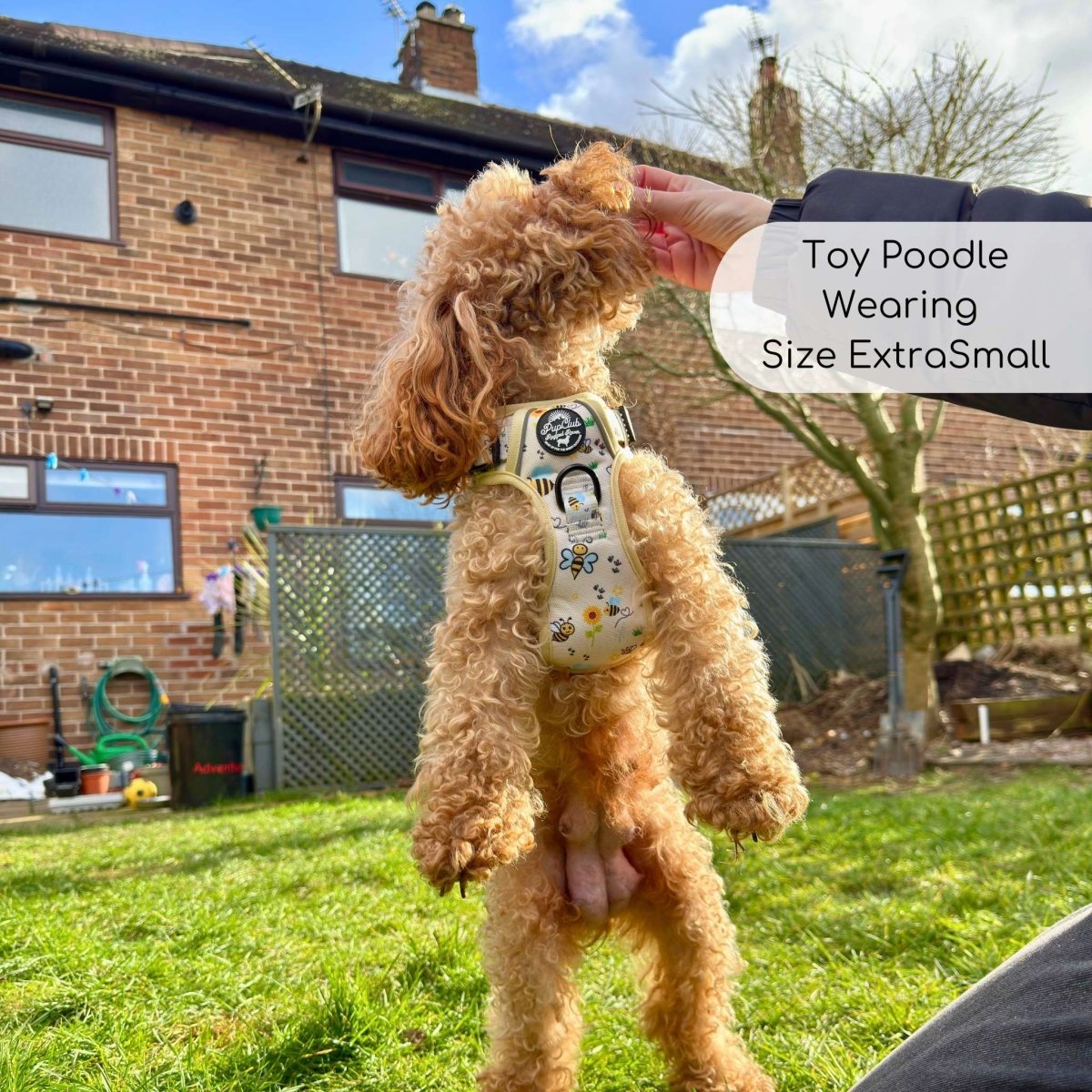
A minimal-weight padded vest for puppies under 5kg — enough insulation without overwhelming a tiny frame.
- Under 100g empty weight
- Thin neoprene chest plate with breathable lining
- Adjustable design — fine tune for the perfect fit
- Soft-edge fleece lining against sensitive skin
- Adjustable at neck and chest
- Available in signature PupClub designs
Best for: Chihuahua, Yorkie, Pomeranian, Maltese, tiny Shih Tzu puppies. See our tiny puppy harness guide for the full toy-breed picture.
Shop Tiny Puppy Range →💕 For Adolescent Pullers: Heavy-Duty Padded Y-Front
Reinforced padding and hardware for the 5–10 month pull phase — especially Labs, Retrievers and GSDs.
- Extra-padded chest plate distributes freight-train pull force
- 25mm bar-tacked webbing rated for real pulling loads
- Dual D-ring — clip front for pullers, back for settled walks
- Reinforced stitching at all load points
- Reinforced back handle for close-proximity control near traffic
- Quick-release buckles for emergency removal
Best for: Labrador, Golden Retriever, German Shepherd, Husky and large-breed puppies entering adolescence.
Shop Heavy-Duty Puppy Harnesses →
Caring for a Padded Harness Through British Weather
Padded harnesses need slightly more care than unlined webbing harnesses — the padding retains moisture if you don't treat it properly.
After Wet Walks
Remove the harness as soon as you're home. Pat it dry with a towel, then hang on a hook away from radiators (direct heat distorts the padding). A harness left on a damp puppy will cause hot spots within 12–24 hours — a harness left damp will smell within 48.
Weekly Wipe-Down
Even without full washes, wipe the inside of the chest plate and the girth strap weekly with a damp cloth. Removes dribble, food crumbs and the occasional bit of mud.
Monthly Machine Wash
Most padded puppy harnesses are machine-washable on gentle cycle at 30°C. Air-dry flat, not tumble — heat crushes the padding loft permanently. Two padded harnesses on rotation (one washing, one in use) extends the usable life of each by roughly 50%.
Watch out for: storing a damp harness in a hallway basket or cupboard. Padding holds moisture far longer than webbing, and a damp harness stored overnight breeds the kind of smell no amount of washing fully removes. If in doubt, dry before storing.
When NOT to Choose a Padded Harness
Padded harnesses aren't right for every puppy or every walk.
- Summer-born puppies in July/August walks — padding traps heat. A lightweight mesh harness is better through the hottest months; add padding in autumn.
- Brachycephalic puppies in warm weather — Pugs and Frenchies overheat fast. Lightweight mesh is safer above ~18°C air temperature.
- Puppies with skin conditions or allergies — ask your vet about hypoallergenic linings; some puppies react to neoprene.
- Competition / show puppies — judges generally prefer thin-webbing harnesses; pads can compress coats.
For hot-weather alternatives, see our guide to lightweight summer harnesses (under review). For the full puppy picture, our puppy harness pillar guide covers every stage.
Frequently Asked Questions
What is the best padded puppy harness for UK 2026?
For most UK puppies, our top pick is the PupClub Padded Puppy Y-Front — 3D spacer mesh chest plate, water-resistant coated canvas outer, four-point adjustment and welded dual D-ring. It copes with British winter walks, dries overnight after wet weather, and fits puppies from around 12 weeks upwards.
Do puppies need a padded harness?
Not every puppy needs one, but most UK puppies benefit significantly. Padded harnesses protect sensitive growing skin from strap friction, insulate against cold-wet British winter walks, and compensate for under-developed adult coats in puppies under 12 months. Summer-only puppies in July/August can use lightweight mesh; most other scenarios are better with padding.
Are padded puppy harnesses waterproof?
Most quality padded puppy harnesses are water-resistant rather than fully waterproof. They shrug off British drizzle and typical wet walks while still breathing, but aren't designed to be submerged. Look for coated canvas or ripstop nylon outers with sealed seams and a quick-dry lining — the combination handles a UK winter without overheating the puppy.
Can padded harnesses cause overheating in summer?
Yes — padded harnesses trap heat, which is helpful in winter but unhelpful in warm weather. Above roughly 20°C air temperature, most UK vets suggest switching to a lightweight mesh harness instead. Brachycephalic puppies (Pugs, Frenchies) need lightweight mesh from about 18°C. Have both harnesses and swap seasonally.
How do I wash a padded puppy harness?
Most padded puppy harnesses are machine-washable on a gentle cycle at 30°C. Air-dry flat — never tumble-dry, as heat crushes the padding loft permanently. A weekly wipe-down plus monthly machine wash keeps the harness fresh through a British winter. Always dry fully before storing.
Will a padded harness fit over a puppy coat?
Sometimes — depends on the coat thickness and harness adjustment range. A four-point adjustable padded harness with 5–8cm of range per point will usually fit over a thin puppy raincoat. A padded harness over a thick winter coat often exceeds max adjustment — size up one to accommodate both, or remove the coat and rely on the harness padding for warmth.
Final Thoughts
A padded puppy harness is one of those small investments that pays back every walk from October to April — softer on growing skin, warmer in UK winter drizzle, and built to handle the mud and puddle-rolls that come with a curious adolescent. The right pick depends on breed size and season, but for most UK puppies our top pick is a Y-front padded style with four-point adjustment and a quick-dry lining.
Browse the full range in our adjustable harness collection or the Country Tweed Collection for heritage-style padded options. For the whole first-year picture, the puppy harness pillar guide walks through every growth stage.
Shop Padded Puppy Harnesses →


